Turn Your Outdoor Furniture Ideas Into Production
Send us your drawings, specifications or ideas. Our engineers and sales team will review materials, dimensions, finishes and customization options.

“Premium,” “all-weather,” and “contract high quality” might seem calming, yet unless those insurance claims are connected to a fiber composition, examination technique, exposure duration, score, building and construction detail, and authorized example, they provide a factory massive space to substitute less expensive material without practically opposing the order.
Why gamble an entire item launch on an adjective?
I deal with customized outside pillow material as a crafted component, not ornamental covering. It must make it through ultraviolet radiation, dampness, body oils, cleaning chemicals, abrasion, temperature level swings, joint stress, and the persistent human habit of leaving paddings outside long after the weather forecast claimed to bring them in.
The hard truth is easy: most sourcing failings start prior to production. The brief was obscure, the example was reviewed inside your home, or a buyer approved a color without specifying what “the same shade” should imply after 1,000 hours of accelerated weathering.
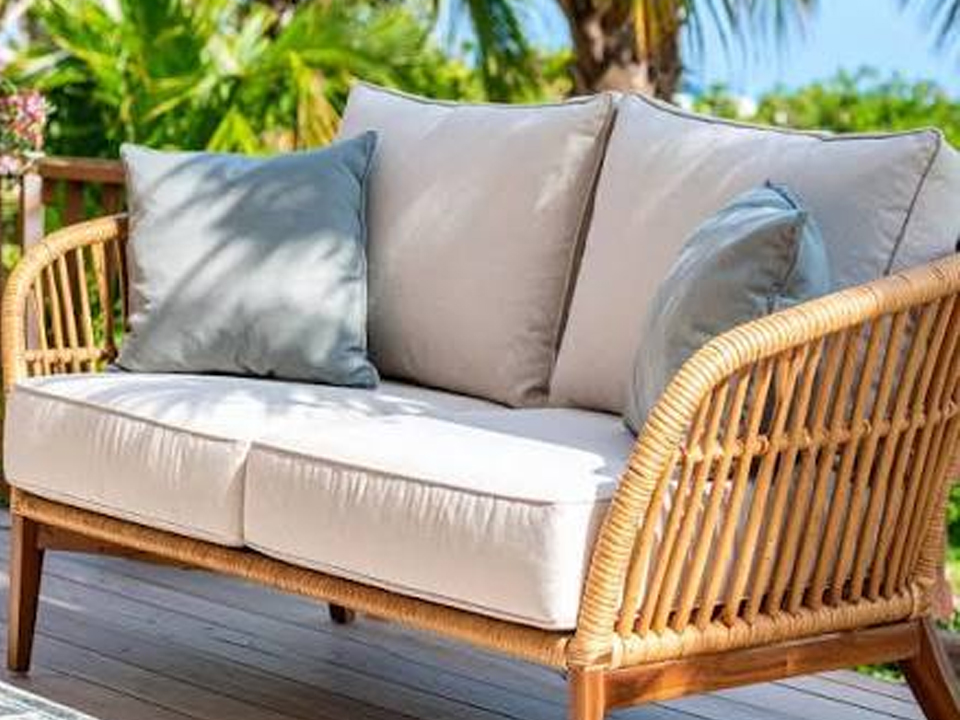
An example informs us how fabric looks under one light source on eventually. It does not disclose how a completed padding will certainly execute after a wet weekend break, a chlorinated swimsuit, duplicated compression, or six months close to a south-facing pool.
A significant specification divides 5 linked layers:
Overlook one layer and the others can be undermined. A very waterproof face material, as an example, still fails when normal stitching thread wicks water with an unsealed leading seam.
And “waterproof” develops its own issue. If water enters with a zipper or needle opening however can not run away through the material, the cover ends up being a tank twisted around foam.
Before asking how to choose outside padding material, specify where the pillow will really live. “Outdoor” is also wide to be beneficial.
A shaded restaurant terrace in London, a roof bar in Dubai, and a pool deck in Florida subject material to different mixes of solar radiation, humidity, salt, chlorine, pollution, warmth, and cleaning regularity. The exact same specification needs to not be replicated across all three.
I split jobs into 4 practical exposure classes:
| Direct exposure course | Common positioning | Key threats | Sensible fabric direction |
|---|---|---|---|
| Covered residential | Deck, evaluated space, covered porch | Spills, moderate UV, occasional moisture | Solution-dyed polyester, olefin, or acrylic |
| Open up domestic | Garden seats, uncovered patio area | Rain, UV, mildew, seasonal storage | Solution-dyed acrylic or state-of-the-art olefin |
| Hospitality contract | Resort swimming pool, dining establishment balcony, rooftop | Hefty abrasion, sunscreen, chlorine, day-to-day cleaning | Recorded performance textile with changeable covers |
| Marine or serious exposure | Coastal resort, luxury yacht, exposed waterfront | Salt, extreme UV, wind-driven rain | Marine-grade acrylic or engineered layered textile |
Map the cushion orientation too. An upright back padding loses water. A boxed seat padding collects it. Deep buttons develop tiny fish ponds, while piping can carry moisture into seams.
Positioning changes everything.
When paddings rest beneath a wholesale eco-friendly cantilever patio area umbrella, the shade pattern should be consisted of in the direct exposure map rather than dealt with as permanent security; low-angle early morning and mid-day sunshine can still strike one side for hours.
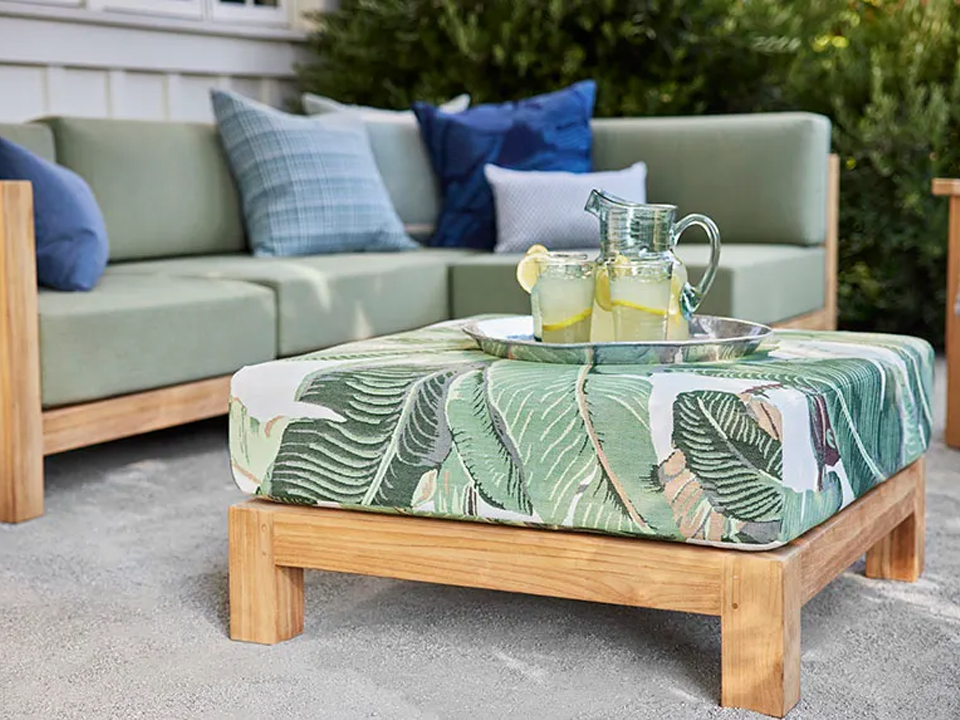
There is no generally best fabric for outdoor cushions. There is just a defensible match in between material, exposure, price point, appearance, service warranty, and upkeep habits.
Pigment is presented while the acrylic fiber is formed as opposed to printed only onto the ended up surface area. That building and construction typically supplies solid color retention, a textile-like hand, and good resistance to sunshine.
Sunbrella material is the best-known commercial instance, but a trademark name is not a full requirements. Collection, construction, intended application, coating, width, great deal accessibility, and warranty terms still matter.
My unpopular viewpoint? “Sunbrella or equal” slouches procurement language. If equivalence matters, specify it utilizing test results.
Olefin is hydrophobic, lightweight, tarnish immune, and usually less costly than premium acrylic. Solution-dyed versions can carry out extremely well in mainstream patio area programs.
However price can hide variation. Warm reaction, weave security, hand feel, pilling, and long-lasting color retention vary by yarn and mill. Buyers need to evaluate the real post number, not simply authorize “100% olefin.”
Polyester offers broad shade and pattern flexibility at attractive rates. Well-engineered solution-dyed buildings can fit covered or moderate-exposure programs.
The words “solution-dyed,” however, do not work out the issue. UV stabilizers, pigment option, textile weight, coating toughness, and exposure level still control field efficiency.
Layered fabrics can supply high water resistance, simple wipe-down cleansing, and superb dimensional stability. They match specific industrial seats, sling applications, and revealed setups.
They additionally feel much less like conventional upholstery, might preserve warmth, and can fracture or tense if the finish system is inadequately matched to temperature level and UV problems. A layered face does not instantly fix seam leak.
The sourcing brief needs to specify the test, conditioning approach, limit, and test stage. “UV immune” alone is not enforceable.
The figures below are industrial screening targets, not universal legal requirements. Change them to the application and verify the exact technique with a recognized lab.
| Requirement | Evidence to demand | Practical sourcing target | Usual trap |
|---|---|---|---|
| Fiber web content | Distributor declaration plus independent confirmation when danger warrants | Specific portion by common fiber name | Authorizing a top quality story without composition |
| UV and colorfastness | ASTM G155 or agreed xenon-arc method, complied with by Gray Scale assessment | Define exposure duration; target Quality 4 or much better where ideal | Comparing hours from different machines as if similar |
| Spray resistance | AATCC TM22 | Preliminary rating plus result after cleansing or weathering | Examining only unused material |
| Hydrostatic resistance | AATCC TM127 | Project-specific stress need | Calling spray resistance “water-proof” |
| Abrasion | ASTM D4157 Wyzenbeek or ASTM D4966 Martindale | Usual business display: 30,000+ dual rubs or specified Martindale cycles | Dealing with unlike examination approaches as interchangeable |
| Seam toughness | ASTM D1683 or equal | Establish by cushion size and expected lots | Examining material yet not the sewed assembly |
| Shade resistance | Spectrophotometer under concurred illuminant | A specified ΔE tolerance accepted by the customer | Visual approval under manufacturing facility illumination |
| Limited materials | Existing lab record plus authorized chemical declaration | Market-specific RSL and PFAS position | Approving “green” as evidence |
| Dimensional stability | Agreed clean, soak, or weathering method | Optimum shrinkage and skew mentioned in the PO | Discovering zipper distortion after cleaning up |
| Whole lot uniformity | Roll-level shade and flaw records | Authorized shade band and assessment plan | Blending great deals in one furniture set |
Do not ask a provider to “fulfill industry requirements.” Name the standard, revision where required, example conditioning, pass degree, and event in charge of the examination price.
Numbers develop liability.
A good custom outdoor pillow textile brief prepares for how the item might fall short and assigns proof versus each failing.
At minimum, define:
One sentence deserves its own purchase-order stipulation: no fiber, yarn, color, complete, backing, or production-mill replacement without written purchaser authorization.
That is not bureaucracy. It is memory. 6 months after authorization, when a mill transforms a water-repellent finish or steps manufacturing to another coating line, the order should remember what the buying group has actually neglected.
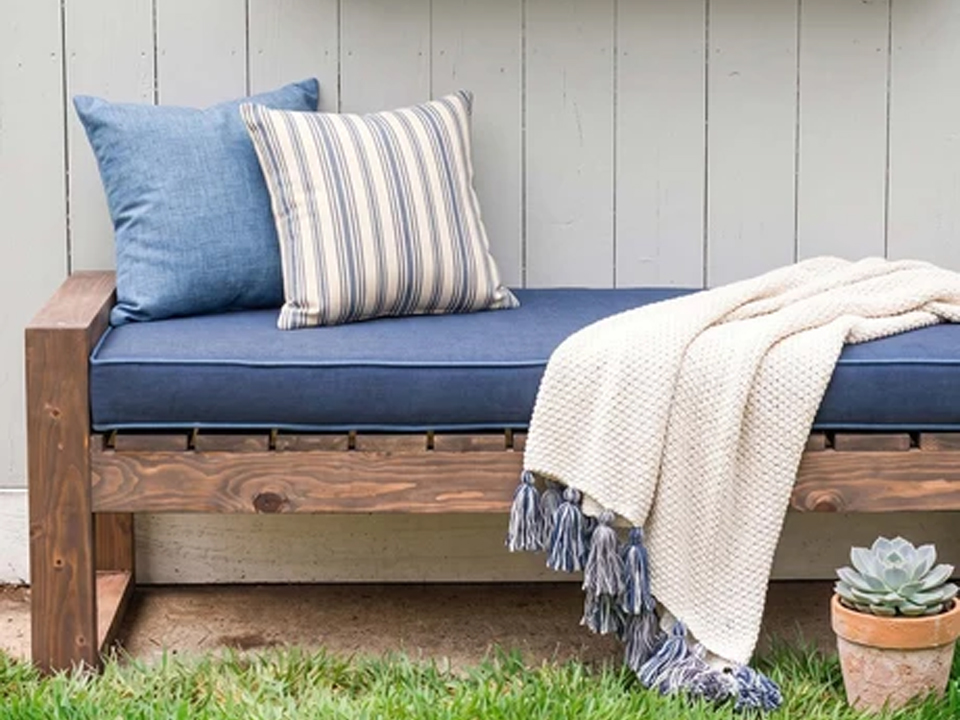
Layout language works till production begins. Then it should end up being geometry.
“Coastal blue red stripe” does not specify a repeat, direction, red stripe width, cutting alignment, or appropriate placement at adjoining seams. “Soft beige” does not specify a measurable color criterion. “Tailored piping” says nothing about cable size or joint allowance.
For a striped cushion program, identify:
This becomes specifically visible on a patio diner table and high sling chair program, where fabric on multiple chair backs is watched simultaneously. A small placement mistake repeated across 40 chairs looks less like variation and even more like faulty production.
Color requires the very same discipline. Accept a physical requirement or adjusted digital spec, define the permitted ΔE, and take a look at examples under pertinent lighting. Metamerism– the propensity of 2 shades to match under one light and different under one more– can make a pillow coordinate indoors and clash outside.
Pattern scale should likewise reply to style. A big herb print might work underneath a daisy-print yard gazebo cover, yet placing 2 assertive repeats with each other without regulating scale can transform an exterior collection right into aesthetic noise.
Laboratory information narrows danger. It does not reproduce the total item.
Request sufficient example yardage for a minimum of one production-representative padding. Utilize the suggested foam, batting, zipper, thread, piping, vents, seam allowances, and sewing tools. After that examine the things.
My favored advancement series is blunt:
Shortcuts come to be cases.
Put water onto the top face, around piping, over zipper ends, and right into tufting points. Record wet-out time, water entry, drain, foam moisture, drying out time, discoloration, and dimensional modification. Repeat after cleaning up because repellency observed on unused fabric may not make it through abrasion or detergent.
A gazebo presents one more variable: protected pillows can stay moist longer because they get less solar drying out and air movement. When defining a hexagonal soft-top gazebo with mesh and drapes, evaluate padding drying with the curtains in their normal operating position rather than assuming the roofing gets rid of wetness exposure.
For decades, tarnish and water repellency offered items. Currently the chemistry behind those insurance claims can develop regulative, reporting, and reputational exposure.
In October 2023, the U.S. Environmental Protection Agency released a wide Poisonous Substances Control Act reporting rule covering suppliers and importers of PFAS, including PFAS included in imported posts. The rule looked back to task from 2011 with 2022, and EPA identified 1,462 substances while advising that its list was not extensive.
Minnesota’s 2023 Amara’s Law went additionally at the item degree: starting January 1, 2025, products with purposefully included PFAS were banned in 11 named classifications, including fabric home furnishings, fabric treatments, and upholstered furnishings.
After that came one more signal. In April 2024, EPA assigned PFOA and PFOS as dangerous materials under CERCLA, commonly known as the Superfund regulation, broadening the potential repercussions of launches and cleanup liability.
What does that mean for a pillow buyer?
“PFAS-free” can not continue to be an uncontrolled vendor statement. Ask whether the claim indicates no purposefully added PFAS, non-detect under a defined test, no fluorinated coating, or a few other definition. Require the provider to identify the coating chemistry, test technique, reporting limitation, lab, example date, and covered manufacturing site.
And preserve records. Chemical conformity is not verified by a two-word e-mail from a salesperson.
Governing category relies on what is being sold, where it is sold, and whether the cushion is a separate fabric product or part of a furnishings short article.
The United State Consumer Product Safety and security Commission states that paddings and pads made use of on outdoor furnishings are excluded from the federal upholstered-furniture flammability standard in 16 CFR Part 1640. That does not eliminate other labeling, chemical, legal, state, or destination-market responsibilities.
Federal Trade Commission assistance presents one more difference: it lists cushions, yarns, materials, and specific furniture covers amongst products covered by textile-labeling needs, while outer coverings of upholstered furniture are provided as left out. Covered products usually need fiber web content, country of origin, and manufacturer or supplier identification.
The group issues.
A sourcing team needs to as a result record whether it is importing cut yardage, substitute pillows, finished furnishings with affixed furniture, or fabric components sent out for later setting up. Similar products can encounter various labeling therapy because the commercial write-up is different.
Material selection comes to be more lucrative when customers treat it as part of an outdoor variety rather than a standalone cushion exercise.
Use a regulated palette throughout paddings, umbrellas, gazebos, slings, powder-coated frames, and public-space furnishings. Do not compel every thing to match specifically. Rather, establish primary colors, supporting neutrals, accent patterns, gloss levels, and product boundaries.
A multicolor textile can borrow one tone from a slatted exterior park bench for bulk sourcing without replicating every shade. That develops a family members resemblance while enabling each item to keep its very own identity.
The same technique decreases functional complexity. Fewer accepted fabric platforms can suggest larger accumulation orders, less complex spare-cover stocks, clearer treatment guidelines, and better take advantage of during color-lot settlements.
But debt consolidation has restrictions. Do not press a sheltered polyester program into exposed poolside solution just to get to an MOQ.
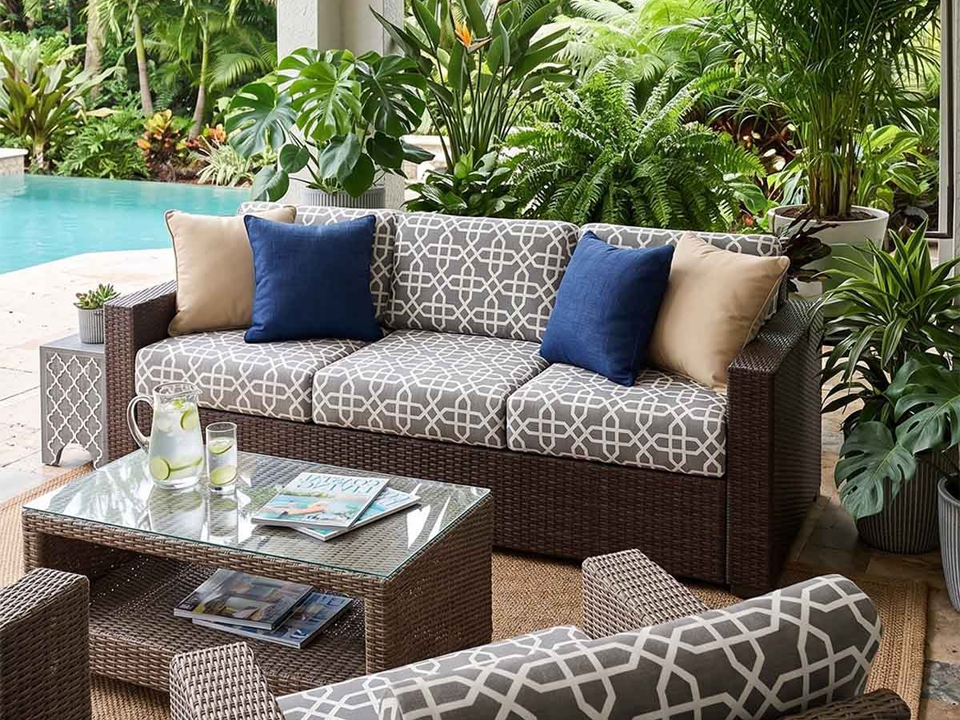
The most effective material for exterior pillows is a solution-dyed efficiency fabric whose recorded UV resistance, water behavior, abrasion strength, cleanability, chemical compliance, look, and price match the intended exposure; for severe sunlight, solution-dyed polymer is often the best premium prospect, while high quality olefin can use better value in moderate applications.
The fiber name alone does not guarantee performance. Contrast the accurate write-up number, mill, building, surface, examination report, service warranty, and manufacturing lot.
Waterproof outdoor pillow fabric creates an obstacle versus quantifiable water stress, whereas water-resistant textile hold-ups surface wetting without always stopping penetration; for numerous detachable pillows, a breathable, fast-drying, waterproof system with water drainage and reticulated foam can do better than an impenetrable cover that catches water going into through seams.
Define the full padding. Fabric, joints, zipper positioning, vents, foam framework, and drying out conditions figure out the area outcome.
To select outside pillow material for business usage, classify the website’s UV, rain, humidity, salt, chlorine, abrasion, cleansing, and storage exposure; translate those conditions right into called test methods and pass thresholds; prototype the full pillow; and ban unapproved material alternatives via the purchase order and secured recommendation example.
Also examine replacement connection. A material that does well but goes away after one period can develop a pricey inequality across a resort or restaurant.
Sunbrella material can warrant its costs when a specified collection, validated construction, strong fade performance, broad shade availability, cleanability, and guarantee minimize substitute threat in high-exposure applications; it is less compelling when paddings remain protected, face light usage, or when a tested olefin or solution-dyed polyester satisfies the exact same task requirements.
Acquire the measurable outcome, not the logo design. Brand name acknowledgment has value, yet it must not replace technical testimonial.
A factory-ready custom-made outdoor padding fabric brief specifies the product location, exposure class, fiber structure, building and construction, weight, size, color tolerance, pattern placement, testing requirements, chemical restrictions, stitching parts, cleaning approach, product packaging, MOQ, preparation, inspection guidelines, guarantee, approved sample, and created controls versus mill or finish alternative.
If a need can change efficiency, look, compliance, rate, or delivery, put it in the quick. Spoken presumptions have no beneficial shelf life.
Send vendors an exposure course, quantifiable textile specification, full pillow drawing, approved shade criterion, needed examination checklist, chemical affirmation, yearly quantity, order split, target audience, product packaging demand, and target date.
After that ask for 3 costs: defined material, recorded equal, and supplier-recommended choice. Need every inconsistency to be stated next to the quotation.
That last self-control exposes the actual contrast. We are no more comparing 2 appealing examples or more system prices; we are comparing validated performance, substitute risk, governing direct exposure, and the cost of failure over the life of the program.
Resource the proof. Authorize the system.
Comments