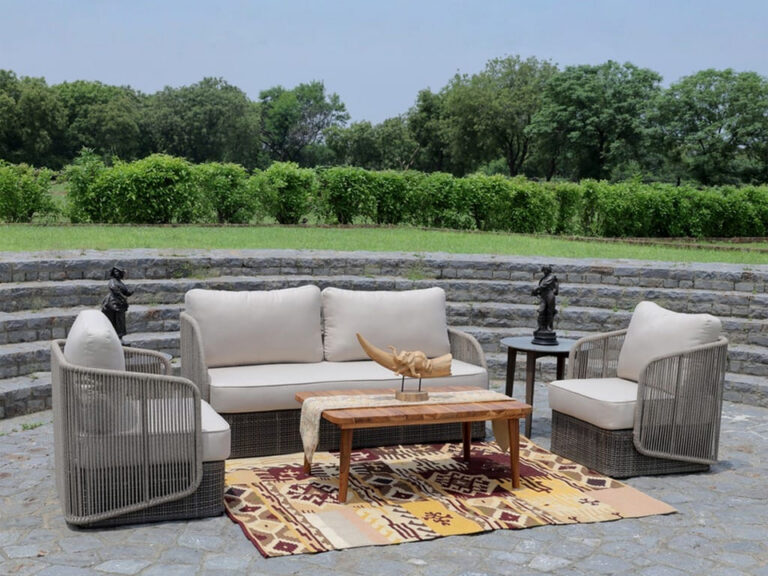
Convierte tus ideas de mobiliario de exterior en productos reales
Envíanos tus planos, especificaciones o ideas. Nuestros ingenieros y nuestro equipo comercial analizarán los materiales, las dimensiones, los acabados y las opciones de personalización.
Small parts matter. When I assess a wholesale furniture offer, I want to know whether the importer can identify, replenish, and safely fit the components that will be needed after delivery, because the original invoice tells me almost nothing about that capability. What is a competitive purchase price worth if one unavailable bracket leaves the customer with an unusable chair?
My position is straightforward: outdoor furniture spare parts belong in the original purchasing agreement.
“We can supply replacements” is an opening statement. It becomes commercially useful when the supplier specifies which replacements, for which production versions, at what price, and within what delivery window.
That is the purpose of a sourcing policy: making after-sales support something we can inspect, fund, and enforce.
Define the Spare Parts Policy Before Negotiating the Furniture Order
A spare parts sourcing policy for wholesalers should establish five things: approved components, compatibility evidence, replenishment commitments, inventory rules, and responsibility when a replacement fails.
I would make the following a purchasing condition:
Every approved furniture model must have a revision-controlled parts schedule, agreed service prices, documented replacement procedures, and a defined support period before the first production order is released.
That is a proposed commercial requirement, not a claim about a universal legal obligation.
Separate components by their function. A decorative cap, a floor glide, a tensioned sling, and a reclining mechanism require different approval decisions. Price alone tells us very little about the consequences of failure.
Para un wooden outdoor sun lounger procurement program, I would request an exploded drawing identifying the backrest mechanism, pivot hardware, wheels where fitted, and replaceable timber sections. Whether those items can actually be replaced must be confirmed against the product’s construction.
The question comes before the container booking.
Three Recall Cases Show Where Replacement Policies Can Fail
The most useful evidence comes from what happened when furniture became unsafe.
September 14, 2023: TJX folding bistro chairs. The U.S. Consumer Product Safety Commission announced a recall involving approximately 11,000 chairs sold under Panama Jack and House & Garden branding. TJX reported seven incidents involving frames breaking or collapsing, including four reports of minor injuries. The stated remedy was a refund, with consumers instructed to stop using the chairs. (CPSC.gov)
December 21, 2023: TJX wood-and-rope bistro chairs. A separate recall covered approximately 29,000 chairs. The company reported eight frame breakage or collapse incidents and six reports of minor injuries. Again, the remedy was a refund. Although the notice sits under a “2024” URL, its stated recall date is December 21, 2023. (CPSC.gov)
June 20, 2024: Cinmar Frontgate Newport chaises. Approximately 70,000 aluminum and teak chaises were recalled because the adjustable backrest could descend unexpectedly, creating finger-crushing and amputation hazards. The affected products included aluminum SKU 67333 and teak SKU 166218. Three reported incidents resulted in two partial finger amputations and one crushing injury requiring surgery; the remedy involved stopping use and obtaining a free repair kit containing a new backrest support bar and instructions. (CPSC.gov)
My reading is practical: a spare part is appropriate only when the repair itself is appropriate.
The Cinmar case illustrates a defined corrective repair. The TJX cases illustrate products for which the announced remedy was a refund. A wholesaler’s ordinary parts inventory should never become an excuse to improvise around a recall instruction.
And these figures are recall populations and reported incidents—not measured failure rates across the outdoor furniture industry.
Buy Compatibility Evidence Alongside Every Component
“Fits our chair” is too vague for a purchase order.
I want outdoor furniture parts suppliers to identify the finished-product SKU, component number, drawing revision, applicable production batches, and any restrictions on interchangeability. A product name alone cannot provide that information.
For patio furniture replacement parts, the technical record should include:
Dimensions, tolerances, attachment points, and orientation.
Material designation and relevant mechanical properties.
Fastener diameter, thread pitch, length, grade, and finish.
Color or finish references where appearance matters.
Installation instructions and approved tightening requirements.
Inspection criteria and evidence of performance in the intended assembly.
An M6 × 1.0 fastener specification, for example, is more useful than “small stainless bolt.” But it still needs length, strength requirements, and the rest of the joint specification.
Para wholesale metal sling patio dining sets, I would ask for sling dimensions, attachment details, and the approved installation method. Matching fabric color would be only one acceptance criterion.
The same discipline applies to metal-and-wood outdoor lounge sets: request separate identifiers for replaceable timber elements, brackets, and fastener kits where the design permits replacement.
Here is the uncomfortable purchasing decision. I would reject a cheaper component if the supplier could not demonstrate compatibility with the intended production version.
A resemblance is not an approval.
Put Supplier Accountability Into the Contract
The best outdoor furniture spare parts suppliers should be able to turn a service promise into records and commitments.
I would qualify them through a trial replacement order. Ask the supplier to identify the right component from a model number and production label, provide the drawing revision, quote a small replenishment quantity, and deliver a labeled sample with installation instructions.
That exercise tests the service you intend to buy.
The agreement should then address six commercial points:
Support duration. State how long parts remain available after the final furniture shipment. Five years could be a negotiating starting point for a particular range; it is not presented here as an industry standard or legal minimum.
Minimum order quantities. Negotiate service quantities separately from production quantities, including mixed-part orders where workable.
Delivery commitments. Distinguish acknowledgment, dispatch, transit, and delivery times. Define who pays for expedited freight after a supplier-caused error.
Price control. Attach a parts price list, its validity period, and a documented adjustment mechanism.
Change control. Require advance notice of changes to dimensions, tooling, materials, finish, or subcontractors, with approval before substitution.
Exit arrangements. Define discontinuation notice, last-order opportunities, and any agreed rights to drawings or tooling.
OEM outdoor furniture components deserve the same scrutiny. Original sourcing does not eliminate the need to check revisions, installation requirements, or a subsequently superseded design.
Para un solid-wood and rattan lounge chair range, I would also establish whether a damaged woven section is separately serviceable, requires specialist work, or means replacing a larger assembly.
That answer belongs in the quotation.
Set Inventory From Service Demand and Lead Time
I would challenge any blanket instruction to “buy 2% spare parts.”
Two percent of what? Finished units, individual components, purchase value, or expected service cases?
Use a defined demand unit. For fastener kits, that might be kits per service case. For feet, it might be individual pieces. For slings, distinguish seats from backrests.
Piénsalo illustrative planning example, not an industry benchmark:
Supported installed base: 10,000 chairs.
Assumed annual demand: 1.2% of chairs require one particular service kit.
Trigger replenishment when inventory position—usable stock plus confirmed incoming stock minus outstanding demand—reaches that level. The order quantity is a separate decision involving minimum quantities, carrying costs, and future demand.
But averages can conceal a seasonal shortage. Recalculate with peak-period demand, actual delivery variability, the age of the installed furniture, and approved alternative parts. The ten-kit buffer above is an assumption to validate.
I would track first-shipment compatibility, fulfillment time, stockouts, repeat claims after repair, and obsolete inventory. A warehouse full of garden furniture spare parts is only useful if those parts support furniture still in service.
Use a Component-Level Purchasing Matrix
Apply this proposed matrix to wholesale outdoor furniture parts, adjusting the evidence and repair permissions for each design.
Component
Evidence required before approval
Stocking approach
Release condition
Feet and glides
Dimensions, retention method, material, approved fit
Pool demand only across verified compatible models
Maintain controlled stock according to model risk and demand
Technical approval and traceable installation
Structural frames
Engineering assessment and defined replacement scope
Decide case by case; avoid speculative generic stock
Approved replacement or designated product remedy
I would assign a named owner to every row. Purchasing controls supply terms; quality approves technical suitability; after-sales records the outcome.
Without that handoff, nobody owns the complete repair.
Preguntas frecuentes
What are outdoor furniture spare parts?
Outdoor furniture spare parts are replacement components used to maintain or repair outdoor chairs, tables, loungers, and seating sets, including glides, fasteners, slings, cushions, and approved mechanisms, with suitability determined by the original product’s model, production revision, material specifications, and installation requirements.
I would list them by component number and compatible furniture revision so service teams can identify the correct item.
How do wholesalers source outdoor furniture spare parts in bulk?
Bulk sourcing of outdoor furniture spare parts is a procurement process that starts with an installed-product register and approved component specifications, then uses verified samples, supplier capacity checks, demand forecasts, negotiated service terms, and incoming inspection to secure compatible stock at a controlled delivered cost.
Start with a trial order. Check identification, fit, labeling, and delivery performance before committing to larger quantities.
What defines the best outdoor furniture spare parts suppliers?
The best outdoor furniture parts suppliers are manufacturers or distributors that can demonstrate compatibility, traceable production, controlled design changes, dependable replenishment, and clear responsibility for defective deliveries, while providing evidence that replacement components meet the performance requirements of the furniture models they are intended to support.
My shortlist would favor suppliers that can prove those capabilities through actual sample and service orders.
How much replacement-parts inventory should a wholesaler hold?
A wholesaler’s replacement-parts inventory target is the quantity needed to cover expected service demand during replenishment lead time, plus a justified safety-stock allowance, adjusted for seasonal demand, supplier reliability, component compatibility, minimum order quantities, and the consequences of leaving a supported furniture model unusable.
Calculate it separately for each component or verified interchangeable group. Review assumptions against actual demand.
Are OEM components always the right replacement choice?
OEM outdoor furniture components are parts supplied by the original equipment manufacturer or its authorized production channel, but purchasing suitability still depends on matching the correct model and revision, verifying specifications, and confirming that the component is approved for the intended maintenance or repair procedure.
I would require documented approval for alternatives, particularly for components that carry weight or control movement.
Make the Parts Schedule a Condition of Your Next Order
Before approving your next outdoor furniture purchase, request the exploded drawings, compatible component list, service prices, replenishment terms, and discontinuation policy.
Then place one trial spare-parts order and follow it through identification, delivery, and approved installation.
Ask for a documented spare-parts proposal alongside the furniture quotation. Give the supplier your intended models, order quantities, destination market, and expected support period—and make the response part of the purchasing decision.