Turn Your Outdoor Furniture Ideas Into Production
Send us your drawings, specifications or ideas. Our engineers and sales team will review materials, dimensions, finishes and customization options.

When a procurement team buys sustainable outdoor furniture without agreeing who will replace worn components, collect damaged stock, and document its next destination, the circular promise depends on decisions nobody has priced or assigned.
How circular is a chair that nobody is contracted to repair?
I judge these programs by what happens after the first damaged cushion, failed joint, or rejected collection request. Recycled content deserves attention. So do construction quality and maintenance. But a circular purchasing strategy needs something less photogenic: a funded, operational route into another period of use.
For hotels, restaurants, distributors, and property managers, that route should be negotiated before the purchase order.
A circular outdoor furniture program coordinates maintenance, refurbishment, collection, and subsequent use. Recycling handles suitable materials when continued use is no longer practical.
Those activities produce different outcomes. Replacing a seat panel preserves an assembled product. Refurbishing a frame preserves more of its manufactured value than breaking it into scrap. Collecting a sofa establishes custody; it does not establish what happened afterward.
My purchasing test is straightforward: can the supplier explain the next intervention, its likely cost, and who is responsible?
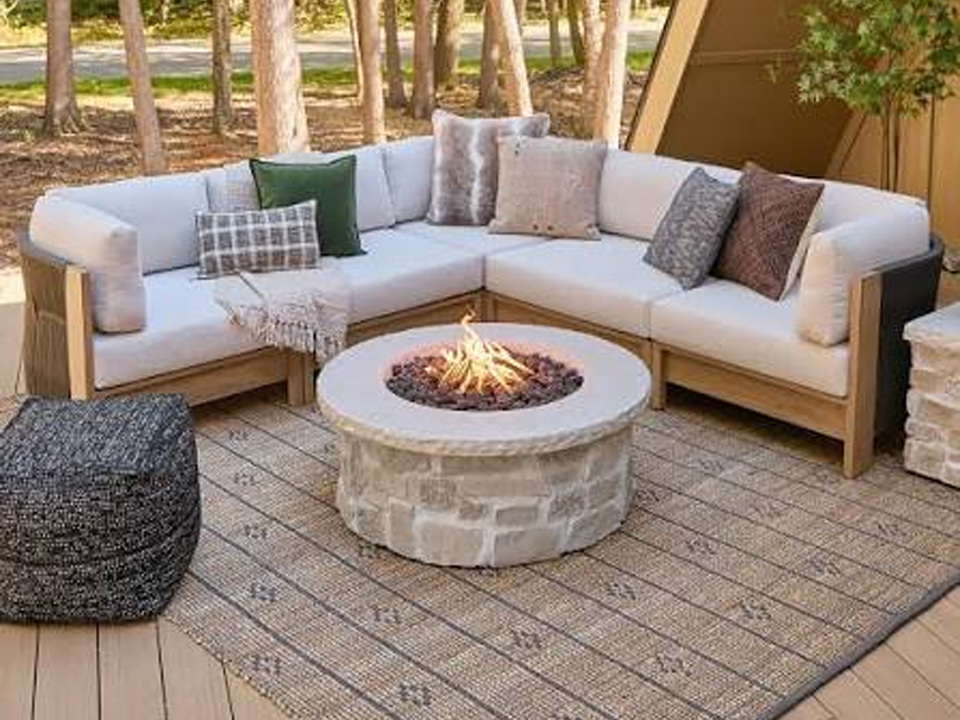
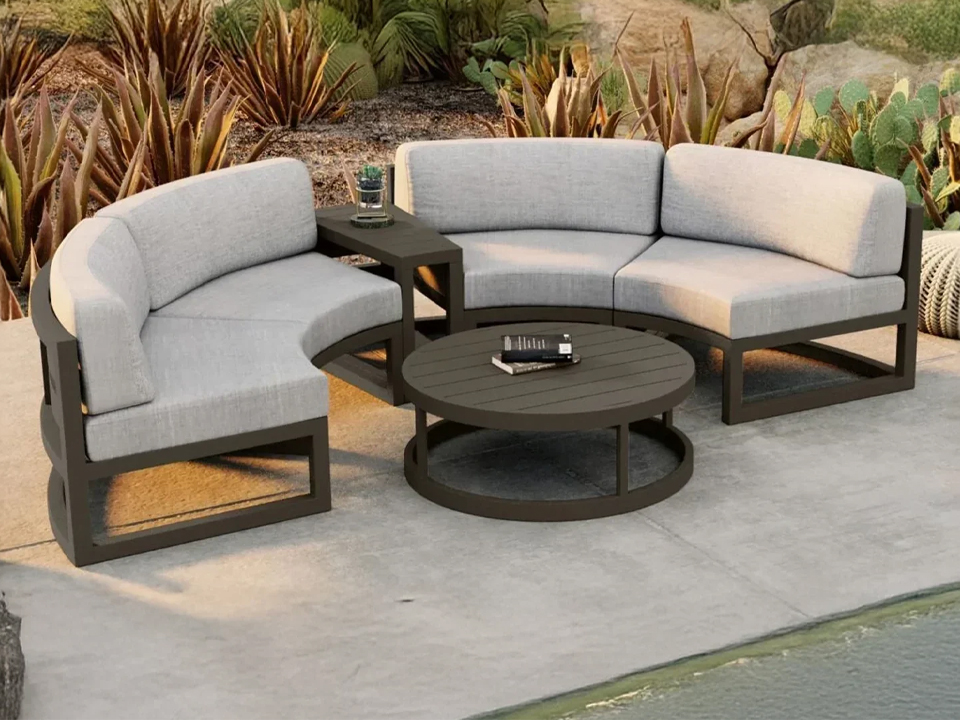
For a patio sofa set with ottomans for wholesale projects, I would request separate replacement prices for cushions, covers, feet, and any removable seating components. I would also ask whether those parts remain available when the original fabric or model is discontinued.
A long frame warranty cannot answer those questions.
And “repairable” is an incomplete specification. A component may be removable in theory while its replacement costs more than the buyer is willing to spend.
Outdoor furniture take-back programs usually begin with eligibility screening, followed by collection or delivery, inspection, and a decision about the returned item’s destination. The commercial details determine whether a buyer can actually use the service.
Consider a real furniture-sector example. IKEA reports that Ingka Group processed 495,000 used IKEA products through Buy Back in FY2024. That establishes substantial collection activity; the figure alone does not identify outdoor furniture volumes, a refurbishment success rate, or avoided emissions.
That distinction matters. A buyer cannot apply a companywide return count to a particular terrace collection.
Before awarding a contract, I would require written answers covering:
For woven patio bistro tables and chairs sourced for commercial projects, I would also ask for packed return dimensions and a collection quotation for a realistic batch.
A service advertised as “available nationwide” still needs a price for your postcode, your quantities, and your loading conditions.

I would specify refurbishment access during sourcing. Waiting until furniture fails leaves the buyer negotiating around whatever construction choices have already been made.
Start with the bill of materials. Ask whether synthetic weave is high-density polyethylene (HDPE), polypropylene (PP), or polyvinyl chloride (PVC). Request the frame material, coating system, fastener specification, and component drawings. “Weather-resistant materials” is too vague to support a repair quotation.
For a freestanding woven egg chair for wholesale lounge sourcing, the questions become practical: can damaged woven sections be replaced, is the cushion separately orderable, and can the base be inspected and serviced without damaging the surrounding structure?
Here is how I would organize patio furniture restoration:
A fresh finish is not evidence of structural integrity.
For commercial seating, I would require the refurbisher to explain the release criteria, warranty coverage, and procedure for items that fail inspection. “Looks almost new” belongs in a sales description; it cannot substitute for an acceptance standard.
The regulatory evidence supports a more demanding procurement approach, although the scope and implementation dates need careful reading.
The Ecodesign for Sustainable Products Regulation, Regulation (EU) 2024/1781, entered into force on 18 July 2024. It establishes a framework for product requirements concerning durability, repairability, refurbishment, and other environmental characteristics, alongside Digital Product Passports. Specific obligations develop through subsequent rules; its adoption did not instantly impose an identical passport requirement on every patio chair.
My practical recommendation is to request usable product records now: model identification, materials, replacement components, and repair history. A QR code has limited value if it opens a promotional page instead of information a technician can use.
A separate measure, Directive (EU) 2024/825, entered into force on 27 March 2024, with national transposition required by 27 March 2026 and application from 27 September 2026. The European Commission describes restrictions on unsupported vague environmental claims and unreliable sustainability labels, alongside better consumer information about durability and repairability.
These are EU consumer-market rules, not a universal warranty for every wholesale transaction. Still, I would apply the same evidentiary discipline when evaluating supplier claims.
“Circular economy furniture” should prompt a request for operating records. Which products were returned? Which were reused? What was rejected? What happened to the remainder?
Cheap repairs can be expensive.
If a refurbishment quotation excludes collection, replacement components, inspection, and the cost of another intervention within two seasons, its apparent saving can disappear even while the buyer reports a substantial reduction in immediate purchasing expenditure.
What, exactly, did that lower invoice buy?
Consider this illustrative procurement scenario—not a supplier quotation or measured industry average. Assume equivalent seating performance and the following refurbishment costs per chair:
Collection and redelivery cost $18; inspection and cleaning cost $12; parts cost $20; repair labor and finishing cost $30; and an allocated contingency costs $10.
| Comparison per chair | Refurbish existing chair | Buy equivalent new chair |
|---|---|---|
| Initial cost, including stated logistics | $90 | $180 |
| Assumed additional usable life | 3 years | 6 years |
| Simple cost per usable year | $30 | $30 |
| Immediate spending for 100 chairs | $9,000 | $18,000 |
| Main assumption to verify | Remaining life after repair | Expected life under actual use |
The refurbishment option cuts immediate spending by 50%. Under these assumptions, both options cost $30 per chair-year.
Change the refurbished chair’s additional life to five years and its simple annual cost becomes $18. Reduce it to two years and the figure rises to $45.
That is why I want condition assessments before ambitious savings claims.
This simplified comparison excludes financing, taxes, subsequent maintenance, downtime, and residual value. A purchasing decision should account for those items where material. Environmental comparisons require their own evidence, including transport, replacement materials, processing, and the amount of new production actually displaced.
A lower invoice cannot establish a percentage reduction in CO₂e.
I would ask every program operator for a reconciled record of incoming items and final outcomes.
The reporting period matters. So does the denominator.
Suppose an illustrative batch contains 100 returned chairs: 60 are refurbished and redeployed, 20 go to material recycling, 10 are disposed of, and 10 remain in storage. The documented return-to-use rate is 60% of collected units at that reporting date.
It is not 90%. Storage is an unresolved outcome.
For outdoor furniture recycling programs, request both unit counts and material weights where useful. Keep energy recovery separate from material recycling, and keep both separate from reuse. If a processor reports that material was accepted, ask what evidence supports the claimed treatment outcome.
My preferred purchasing dashboard tracks:
One more number deserves attention: the share of products reaching retirement that actually enter the program. Excellent results from a tiny, selectively accepted batch tell us little about the rest of the installed furniture.
Circular outdoor furniture programs are organized systems that keep patio and garden furniture in use through maintenance, repair, refurbishment, collection, and redistribution, with material recycling reserved for components that cannot be safely or economically reused under the program’s documented acceptance and processing rules.
I would evaluate them through repair access, service coverage, written responsibilities, and verified outcomes.
Furniture take-back programs work by checking product eligibility, agreeing collection or drop-off arrangements, inspecting returned items, and routing them into reuse, refurbishment, parts recovery, or recycling, with fees, ownership transfer, customer credit, and final destination reporting determined by the provider’s written terms.
Ask for acceptance before arranging transport. A brand’s general program description may not cover your particular models, condition, or commercial application.
Outdoor furniture refurbishment is a process of restoring usable condition by identifying the construction, assessing structural integrity, cleaning appropriate surfaces, repairing or replacing worn components, renewing suitable finishes, and checking the completed item against requirements for its intended setting before returning it to service.
For commercial furniture, I would prioritize structural assessment and documented release criteria. Surface treatment should follow the identified material and coating system.
Refurbished outdoor furniture is an existing product restored for further use, and it can cost less than a new equivalent when its combined inspection, repair, transport, and maintenance costs are justified by enough additional usable life, although the initial price alone cannot establish overall savings.
Compare cost per usable year, warranty scope, downtime, and replacement-part availability. The $90 example above illustrates why a 50% lower initial cost need not produce lower annual costs.
Before sourcing a new terrace collection, assemble a condition inventory and request two priced options: refurbishment of suitable existing furniture and replacement with documented parts support and return terms.
If you are reviewing a cushioned backless trestle bench for wholesale purchasing, include cushion replacement, frame inspection, component availability, and end-of-use collection in the supplier discussion.
Ask for a written refurbishment and take-back proposal covering the exact products, quantities, location, fees, and reporting obligations. Start with a small batch, inspect the results, and use that evidence to negotiate the larger contract.
Sustainable outdoor furniture earns its value through years of useful service. Put responsibility for those years in writing.
Comments