Concrétisez vos idées de mobilier d'extérieur
Envoyez-nous vos plans, vos cahiers des charges ou vos idées. Nos ingénieurs et notre équipe commerciale examineront les matériaux, les dimensions, les finitions et les options de personnalisation.

When a buyer approves an outdoor chair because the sample feels solid, the finish looks clean, and the quoted price meets the target, that approval can quietly commit the business to untested assumptions about joint strength, assembly variation, drainage, and everyday use.
What happens when those assumptions reach 10,000 units?
That is where design for manufacturing earns its place. A useful review connects product requirements to the materials, processes, tooling, and inspections needed to reproduce the design consistently.
I would judge outdoor furniture DFM reviews by the decisions they close: which geometry changes, which tolerances matter, which hazards require redesign, and which claims still need physical verification.
A polished presentation proves very little. A controlled drawing revision, supported by relevant evidence, gives the tooling team something they can actually build.
An effective pre-tooling design review answers three connected questions:
The distinction matters. Manufacturing feasibility does not establish durability or product safety. A part can be easy to mold and still have an inadequate load path; a beautifully welded frame can still trap water.
I would begin with a written use specification: residential or hospitality application, intended loading, exposure conditions, cleaning methods, assembly responsibility, and expected maintenance.
Then identify what “tooling” actually includes. Outdoor furniture programs may require injection molds, extrusion dies, bending tools, welding fixtures, drilling jigs, or assembly gauges. A small design revision can affect several of them.
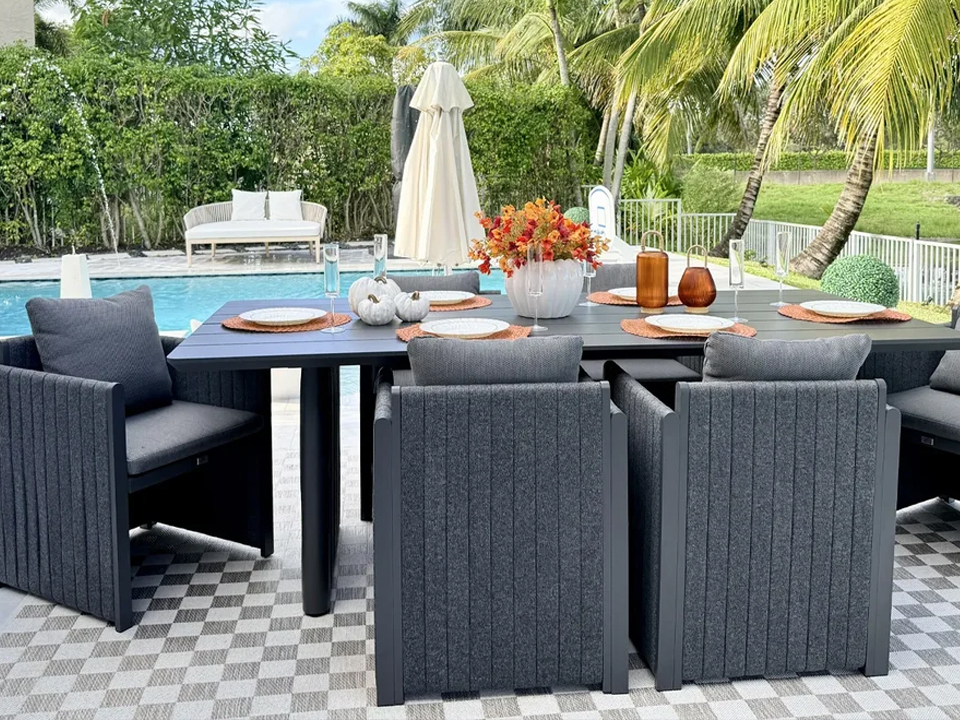
Pour un patio conversation set with an open-weave design, useful review questions include how the woven surface transfers load into the frame, how attachment points remain accessible, and how tension variation affects fit and comfort.
Those are questions to investigate—not findings about that particular product.
The following cases concern other brands. They illustrate relevant failure modes; they do not establish defects in the products linked elsewhere in this article.
On September 14, 2023, the U.S. Consumer Product Safety Commission announced a recall of approximately 11,000 TJX foldable bistro set chairs sold under the Panama Jack and House & Garden brands. The wooden frames could break or collapse while occupied. TJX reported seven incidents, including four minor injuries; the sets had sold for $150–$200.
My engineering takeaway is to investigate the complete load path through the frame, connections, and folding mechanism. Checking the nominal size of each wooden member would leave too much unanswered.
The notice does not identify the underlying engineering cause. Claiming that a particular screw, timber defect, or missing test caused this recall would go beyond the evidence.
On January 25, 2024, CPSC announced a recall of approximately 53,800 Lancaster Table & Seating Allegro plastic side chairs intended for outdoor use. The chairs used glass-reinforced polypropylene and sold for $45–$66. Clark Associates reported 16 incidents of chairs breaking apart, resulting in two injuries. The recalled range included black model 427CRESINSBK and white model 427CRESINSWH.
“Reinforced” describes a material system. It does not certify the finished chair.
For a molded seating design, I would want the review to address section transitions, stress concentrations, gate locations, weld lines, material conditioning, and the process assumptions behind any structural simulation.
Again, these are appropriate investigation topics. The recall notice does not establish which of them contributed to the failures.
On June 20, 2024, CPSC announced a recall of approximately 70 000 chaises longues « Newport » de la collection Frontgate Resort, including aluminum SKU 67333 and teak SKU 166218. The adjustable backrest could descend unexpectedly while being adjusted from a seated position. Cinmar reported three incidents: two partial finger amputations and one crushing injury requiring surgery. The remedy included a replacement backrest support bar.
A furniture manufacturability analysis must therefore examine movement as well as static geometry. Where do users place their hands? What happens during incomplete engagement? Can a support disengage while loaded?
These recall counts are reported incidents, not measured failure rates. They also cannot tell us whether a DFM review occurred or whether a particular review would have prevented the outcome.
They do tell us which questions deserve serious attention.
My strongest objection to weak furniture reviews is that they discuss components individually when the risk sits between them.
A seat transfers force into rails, joints, legs, and the ground. An armrest may also receive substantial loading when someone pushes up to stand. A footrest changes how the user enters, occupies, and leaves the chair.
Pour un tall Adirondack armchair with a footrest, I would include access, asymmetric loading, arm connections, footrest attachment, and stability in the review brief. The material and construction would determine the detailed checks.
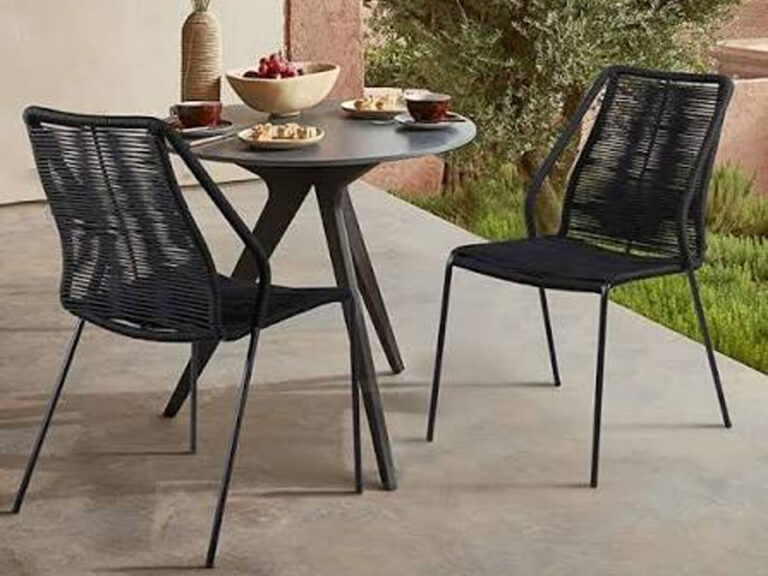
A tall patio bistro table and sling-chair configuration raises related questions about table stability, chair racking, sling retention, and the consequences of dimensional variation across the assembled frame.
Start with foreseeable use. Then determine the loads, test methods, and acceptance criteria.
I would challenge a cost reduction that removes a brace or reduces a section before the team has established what function that feature performs. The saving may be real. So may the structural consequence.
“Outdoor grade” is not a complete procurement specification.
Depending on the construction, the review may need to define the alloy and temper, timber species and moisture requirements, polymer grade and permitted substitutions, fastener material, coating preparation, or fabric construction.
And substitutions need control. A resin, adhesive, rope, or coating described as “equivalent” should enter through an engineering change process with defined verification requirements.
For steel and aluminum assemblies, examine where water enters, where it collects, and how the production process reaches vulnerable surfaces. A coating specification cannot compensate for every inaccessible crevice or drainage problem.
An adjacent example is a steel wheelie-bin enclosure with a planter. That configuration warrants questions about drainage routes, wet planting media, loaded planter weight, door alignment, and access for coating and maintenance.
I would also separate environmental screening from service-life claims. A salt-spray result does not, by itself, establish a number of years outdoors. Accelerated UV exposure likewise needs defined conditions and acceptance criteria.
Useful evidence states what was tested, how it was exposed, and what changed.
Dimensions accumulate. Processes add variation.
Consider an illustrative assembly in which three dimensions contribute directly to a hole-position mismatch. If each allows ±0.5 mm, their worst-case accumulated deviation is ±1.5 mm before other contributing effects are considered.
That is an arithmetic example, not a recommended furniture tolerance. Actual analysis must account for the dimension chain, datum scheme, and process behavior.
Now add the manufacturing sequence. Does the frame distort during welding? Is a mating surface coated before assembly? Can the assembler reach the fastener with the specified tool? Can inspection reach the feature after weaving or upholstery?
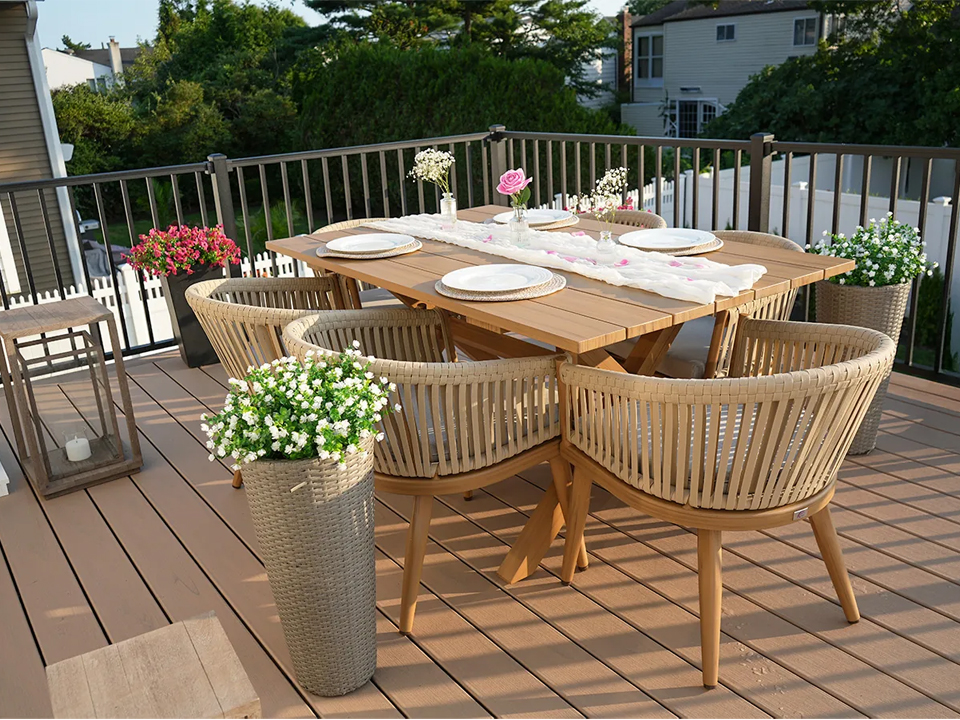
Pour un backless slatted bench intended for wholesale sourcing, the review should consider slat spacing, support alignment, fastener access, and material movement where relevant. A neat rendering cannot answer those questions.
This is also where prototype evidence needs careful interpretation. A hand-fitted sample may conceal variation that appears when parts come from different fixtures, operators, or production batches.
I would ask the supplier to identify every sample adjustment that the intended production process does not include.
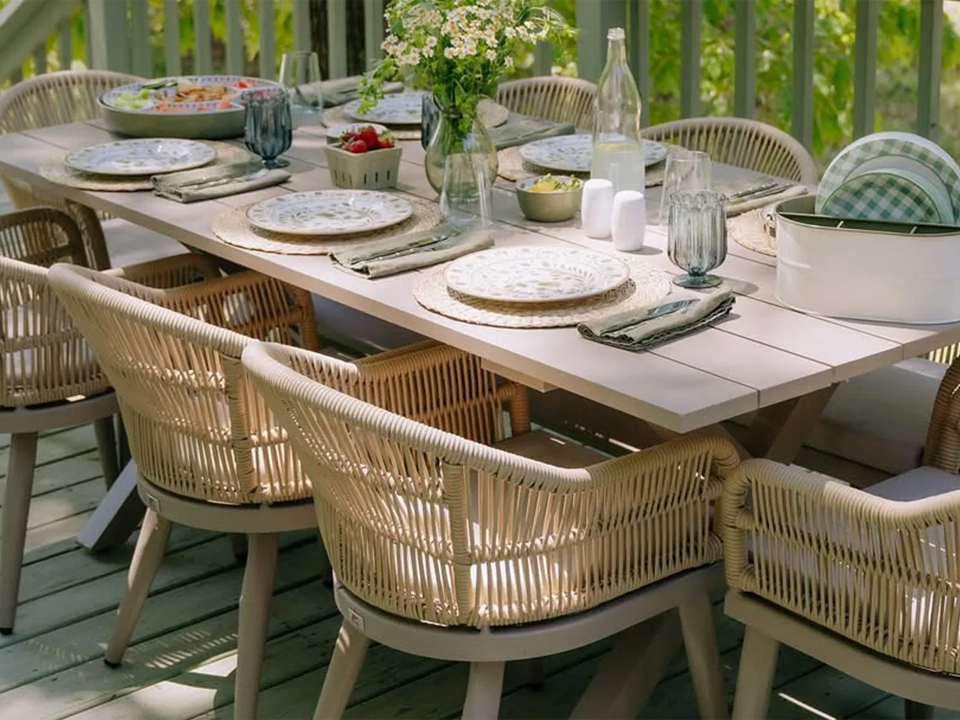
An outdoor furniture design risk assessment should connect each concern to an owner, a design decision, and a verification method.
The following checklist separates work that can support initial tooling release from checks that require production-representative parts.
| Review area | Risk to investigate | Evidence supporting tooling release | Verification requiring representative production |
|---|---|---|---|
| Structural load paths | Joint failure, excessive deflection, collapse | Defined loads, calculations, relevant prototype or joint tests | Strength and durability testing of the manufactured assembly |
| Stability and moving parts | Tipping, disengagement, trapping points | Geometry review, movement assessment, applicable test plan | Testing across intended positions and relevant variation |
| Material specification | Uncontrolled substitution or inconsistent properties | Controlled material specifications and change requirements | Lot identification and required material checks |
| Molded components | Warpage, weak transitions, difficult ejection | Tooling review of gates, sections, draft, cooling, and ejection | Mold trials, dimensional checks, and functional testing |
| Metal fabrication | Distortion, inaccessible welds, inconsistent alignment | Joint details, fixture strategy, process sequence | Measurements and tests from the intended fabrication process |
| Drainage and finish | Water retention, inaccessible surfaces, coating damage | Drainage details and documented finishing process | Coverage, adhesion, and specified exposure testing |
| Assembly and service | Misassembly, loose joints, inaccessible hardware | Assembly sequence, tool access, fastening requirements | Assembly trials and functional checks using final parts |
My preferred release record identifies the drawing revision, tool scope, unresolved items, responsible people, and required evidence.
A decision to authorize prototype tooling is different from approval to ship finished products. If production tooling is needed to answer an engineering question, authorize that limited step explicitly and retain a separate gate for production acceptance.
A meeting does not close a risk. Evidence and an approved decision do.
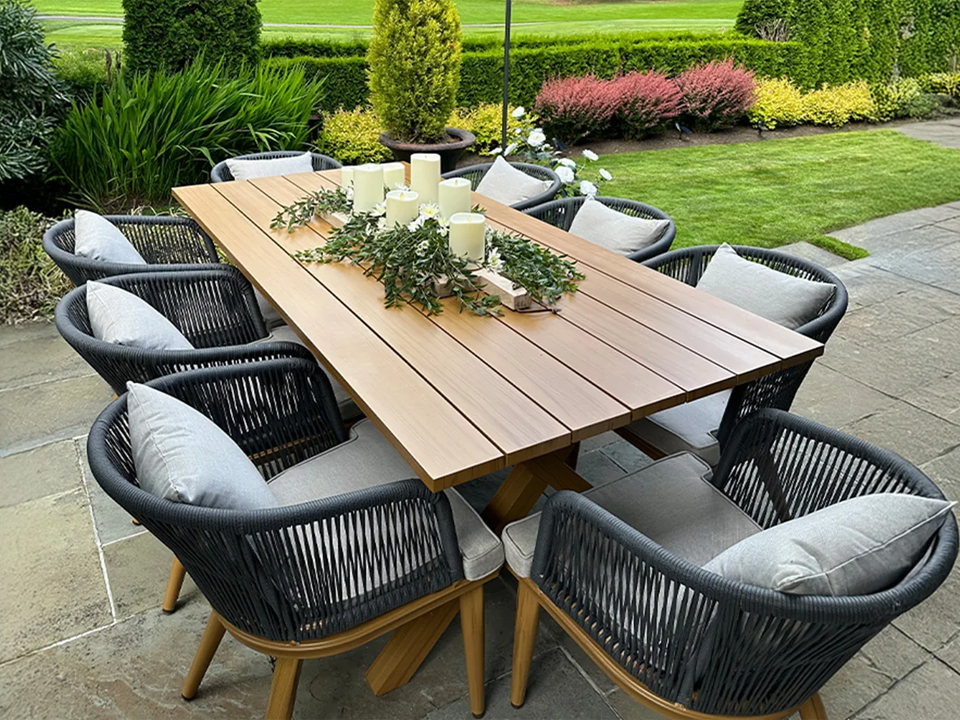
Design for manufacturing in outdoor furniture is the process of adapting product geometry, materials, joints, finishes, and assembly methods to the capabilities of the intended production system, so the specified design can be manufactured consistently while supporting defined requirements for function, durability, inspection, and cost.
It should begin while meaningful changes remain practical. Tooling approval is a decision point, not the starting line.
The best practices for furniture DFM reviews are a coordinated set of engineering controls that connect intended use, manufacturing capability, material specifications, tolerance analysis, assembly access, and verification evidence to named owners and documented decisions, with separate approvals for tooling investment and acceptance of production output.
I would include design, manufacturing, tooling, quality, and sourcing representatives. Each sees a different part of the problem; someone must own the interfaces between them.
Resolving outdoor furniture design risks before tooling is a structured process of identifying credible failure modes, assessing their consequences, revising the design or manufacturing plan, and verifying the proposed controls with analysis and representative prototypes, while explicitly reserving any checks that require production tooling for later approval gates.
Begin with the risks that could cause injury or make the product unusable. Give every open issue an owner and a defined route to closure.
A pre-tooling design review package is the controlled collection of drawings, material requirements, intended-use conditions, manufacturing assumptions, tolerance analyses, risk records, and verification plans that allows the buyer and manufacturer to evaluate the same product definition and document the basis for each tooling release decision.
Include the bill of materials and relevant prototype reports. If a report covers an earlier revision, identify what changed and whether its conclusions still apply.
Before approving tooling, ask your supplier for a review against the exact drawing revision, a proposed manufacturing sequence, and a risk register showing evidence, owners, and outstanding decisions.
Bring the commercial constraints into that discussion: target cost, forecast volume, delivery date, intended market, and acceptable maintenance requirements.
Then ask one direct question: Which assumptions are we paying to lock into the tooling, and which have we actually verified?
Commentaires