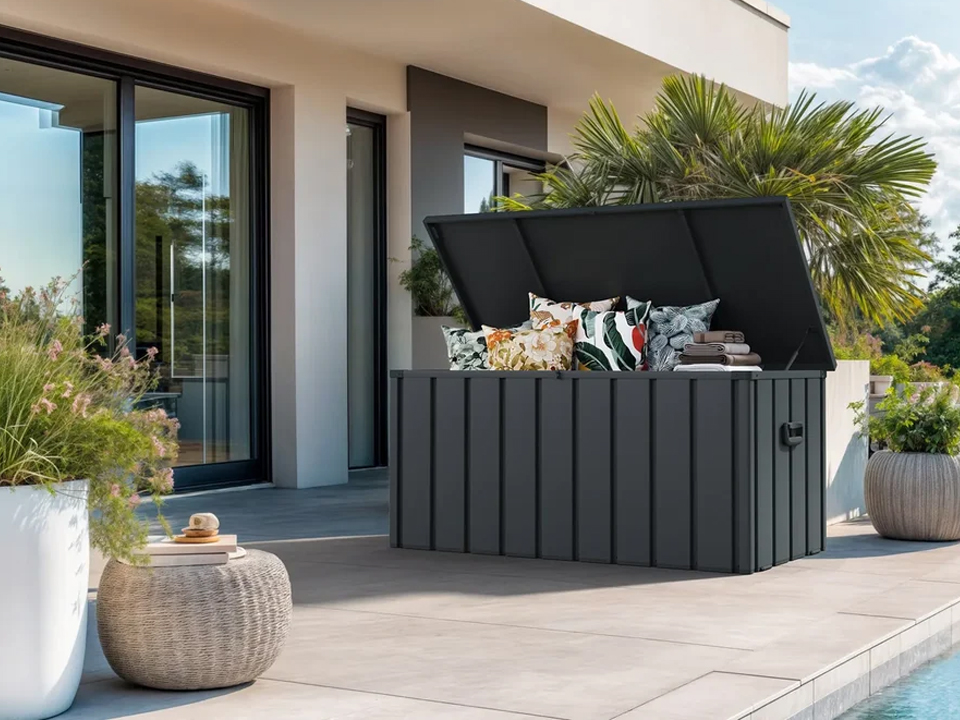
Transforme as suas ideias de mobiliário de exterior em produtos concretos
Envie-nos os seus desenhos, especificações ou ideias. Os nossos engenheiros e a nossa equipa de vendas irão analisar os materiais, as dimensões, os acabamentos e as opções de personalização.
Paper proves little. When a supplier presents a polished furniture testing report, complete with laboratory branding and a prominent “PASS,” I want to know whether the tested sample matches the construction, materials, and intended use of the product being purchased. What exactly has that document proved?
That question drives this guide.
To verify furniture test reports and material certificates, confirm the issuer, obtain the complete document, check the applicable standards, and connect the tested sample to your order. Then examine what the evidence leaves unanswered.
A minha posição é clara: a purchasing decision needs a traceable evidence chain, not a folder full of impressive logos.
Understand What Each Furniture Testing Document Actually Proves
Furniture testing and certification are related, but they perform different jobs.
A test report records results for identified samples under specified conditions. A product certificate supports a defined claim within a certification scheme. A material certificate concerns an identified material, grade, batch, or property; its meaning depends on who issued it and what it covers.
Those distinctions matter when somebody sends three attachments and calls the package “full compliance.”
I would separate the documents into three questions:
Performance: What was tested, using which method, and with what result?
Certification: What claim is certified, for which products, under which scheme?
Traceability: How does the tested or certified item connect to this order?
A chemical test on upholstery does not answer a question about chair stability. A certificate for a panel producer does not, by itself, identify the panels inside your cabinet.
Read the claim before admiring the stamp.
Check the Product Category and Standard Before Reading “PASS”
Start with the destination market, intended use, product category, and applicable manufacturing date. Otherwise, you can authenticate a document perfectly and still approve irrelevant evidence.
Consider the U.S. clothing storage unit rule. On April 19, 2023, the Consumer Product Safety Commission announced its adoption of ASTM F2057-23 under the STURDY law, with an effective date of September 1, 2023. The announcement described stability requirements involving carpeting, loaded drawers, and simulated interaction by children weighing up to 60 pounds.
That is a specific regulatory scope. It is not a universal test requirement for everything called a cabinet.
CPSC guidance defines covered clothing storage units by intended function and criteria including freestanding construction, height of at least 27 inches, weight of at least 30 pounds, and enclosed storage volume of at least 3.2 cubic feet.
Ask the laboratory or compliance specialist to confirm:
The relevant standard and edition.
Whether the report covers every required clause or selected tests.
The intended use category and any exclusions.
Whether the tested configuration represents the configuration being ordered.
“Tested to” deserves scrutiny. Which parts, exactly?
Authenticate the Issuer, Report Number, and Laboratory Scope
A convincing PDF is an attachment. Authentication requires an independent check.
My recommended process starts with contact details obtained independently from the issuing organization. Use its official verification service where available; otherwise, contact the issuer and request confirmation of the report or certificate.
Send the complete document and ask whether its number, issue date, applicant, sample identification, and revision match the issuer’s records. If confidentiality prevents disclosure, ask the supplier to authorize verification.
Then inspect laboratory competence.
ILAC explains that laboratories are accredited by accreditation bodies, including signatories to the ILAC Mutual Recognition Arrangement; ILAC does not itself accredit laboratories. Testing laboratory accreditation commonly uses ISO/IEC 17025.
I would check the laboratory’s listed location and accredited scope against the actual test methods. For a historical report, ask about accreditation coverage when the work was performed, as well as any current status relevant to ongoing certification.
Useful warning signs include:
Missing pages, annexes, photographs, or referenced attachments.
Different model numbers across the report.
An unexplained mismatch between the laboratory address and accreditation record.
A verification page that confirms a company but identifies no relevant product.
Edited conclusions or amendments without an issuer-confirmed revision trail.
These are reasons to investigate. They are not, individually, proof of fraud.
And a working QR code? It establishes little unless the destination and returned information are independently trustworthy.
Match the Tested Sample to the Furniture You Will Receive
Here is the uncomfortable part: an authentic report can describe a product you are never going to receive.
Para um wooden outdoor sun lounger under wholesale procurement, I would request a comparison between the tested sample and the ordered specification: wood identification, member dimensions, fasteners, joints, adjustment mechanism, finish, and assembly instructions.
Two recalls show why assembly details deserve attention.
On December 21, 2023, CPSC announced a recall of approximately 29,000 TJX foldable wood and rope bistro chairs. The firm reported eight incidents of frames breaking or collapsing and six minor injuries. Sets had sold for $130–$350.
On May 9, 2024, CPSC announced the recall of approximately 4,500 Article Spin Swivel Chairs, with another 140 sold in Canada. The firm reported 190 instances of bases breaking, with no reported injuries; the chairs had sold for about $700.
Neither notice establishes that forged documents caused the problem. My procurement takeaway is narrower: material descriptions and selling prices cannot substitute for evidence about the assembled product.
Require a controlled bill of materials and drawing revision. Ask the supplier to identify changes since testing and obtain a documented assessment of whether those changes require additional evaluation.
Trace Furniture Material Certificates Back to the Material Producer
Material test report verification should follow the material through production.
A generic “low-formaldehyde” statement leaves too much unanswered.
EPA’s TSCA Title VI framework covers regulated hardwood plywood, medium-density fiberboard, particleboard, and finished goods containing those materials. It includes testing, third-party certification, labeling, and recordkeeping requirements. EPA also identifies March 22, 2024, as the compliance date for laminated product producer provisions.
The distinction between panels and finished goods matters. EPA explains that finished goods do not themselves require formaldehyde emissions testing and certification under this framework, but must use compliant regulated panels and meet applicable documentation and labeling requirements. Non-exempt laminated product producers have additional obligations.
So I would request the relevant panel producer and product identification, certification details, and supplier records connecting the material to the order.
Check the certifier independently, too. EPA maintains information on recognized third-party certifiers, including suspended or revoked recognition.
One detail worth remembering: EPA says it does not issue these certificates itself; certification is performed by third-party certifiers. A claim of an “EPA-issued furniture certificate” therefore needs clarification.
Use This Furniture Certificate Verification Checklist Before Approval
I would use the following as an internal purchasing checklist. The acceptance criteria should reflect the actual product, market, and contract.
Verification point
Provas a solicitar
Reason to pause approval
Document authenticity
Issuer confirmation of report number and revision
Issuer cannot confirm the document
Document completeness
Full report, annexes, photographs, amendments
Missing pages or unexplained edits
Laboratory competence
Relevant accreditation scope and location
Required method or site is unaccounted for
Regulatory scope
Product classification and applicable standard edition
Wrong category, market, or edition
Test coverage
Methods, conditions, results, exclusions
Selected tests presented as complete compliance
Product identity
Model, drawings, dimensions, bill of materials
Tested sample differs without technical justification
Material traceability
Producer, product or batch identification, supply records
Certificate cannot be connected to the order
Production changes
Revision history and technical assessment
Substitutions have no documented evaluation
Release decision
Recorded review and closed corrective actions
Material questions remain unresolved
When a numerical result is close to a limit, ask how the laboratory determined conformity and whether measurement uncertainty affects that decision. When a report gives only a conclusion, request the supporting detail available for that method.
Keep the approval record with the purchase order.
My recommendation is to make substitutions subject to written review before production. That gives the buyer an opportunity to assess a changed panel, fastener, coating, or mechanism while the decision is still reversible.
FAQs About Furniture Test Reports and Material Certificates
What is furniture test report verification?
Furniture test report verification is the process of confirming that a laboratory issued a complete, authentic report, that its methods and findings address the buyer’s requirements, and that the tested sample can be traced to the exact furniture model, materials, and production configuration being purchased.
I would record authenticity, relevance, and traceability as separate checks.
How do you check furniture certificate authenticity?
Furniture certificate authentication is an issuer-led check of the certificate number, holder, covered products, manufacturing site where applicable, validity dates, and current status, followed by confirmation that the document supports the specific certification claim attached to the furniture or material in your purchase order.
Use independently obtained issuer contact details. A supplier’s screenshot should start the inquiry, not finish it.
How long is a furniture testing report valid?
A furniture testing report’s continuing relevance depends on applicable regulations, certification schemes, buyer requirements, and changes to the tested product, rather than a universal expiry period, so its issue date should be assessed alongside the material specification, construction revision, standard edition, and intended use.
Ask what has changed since testing. A recent date alone does not establish suitability.
What furniture compliance documentation should buyers request?
A furniture compliance documentation pack is a product-specific collection of complete test reports, applicable certificates, approved specifications, material traceability records, and any required declarations or labels that together allow a buyer to connect verified performance claims with the model and production batch named in the order.
The exact contents depend on the product and destination market. More attachments do not necessarily mean better evidence.
Request Verifiable Evidence Before Approving Your Order
Send your supplier the product specification, destination market, intended use, and this checklist. Request complete furniture test reports, relevant furniture material certificates, and records connecting both to the proposed order.
Then resolve the gaps before approval.
I would make one question the final purchasing gate: Can we show how this evidence applies to the furniture we are buying?