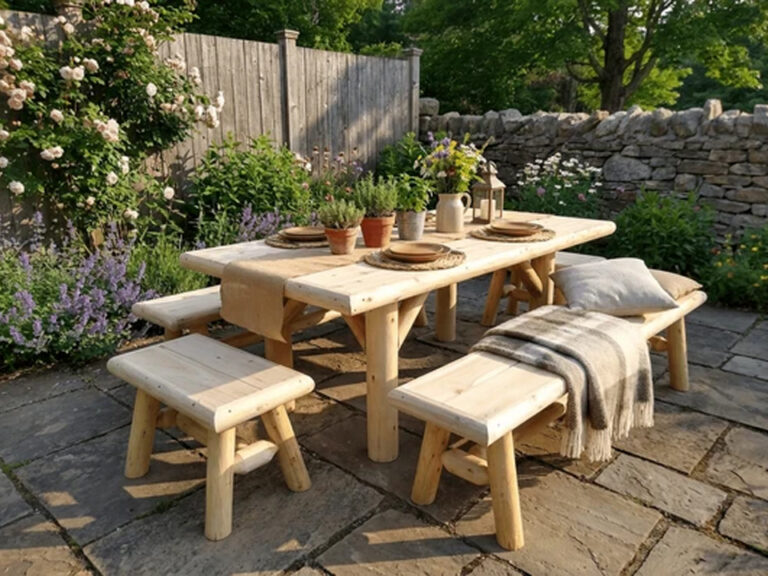
Воплотите свои идеи по созданию уличной мебели в реальность
Присылайте нам свои чертежи, технические характеристики или идеи. Наши инженеры и специалисты отдела продаж рассмотрят материалы, размеры, варианты отделки и возможности индивидуальной настройки.
A patio can have expensive furniture, immaculate paving and architectural planting, but if direct afternoon sun turns the seating area into a heat trap between 2 p.m. and 6 p.m., people simply stop using it—and that is where many otherwise impressive outdoor designs fail.
So what actually works?
The best garden shade ideas start with one question: where is the unwanted solar exposure coming from? Once you understand that, the choice between a tree, parasol, pergola, gazebo or cabana becomes considerably easier.
And the problem is not cosmetic. NOAA reported in 2023 that urban heat islands with less vegetation and more heat-absorbing pavement can be up to 20°F hotter than nearby areas. The NOAA urban heat mapping program has consequently focused heavily on tree cover, pavement and neighborhood-level temperature differences.
CDC data tell the same story from another direction. A 2024 analysis of the 2023 warm season found that heat-related emergency-department visit rates rose substantially across several U.S. regions compared with 2018–2022. The CDC heat-related illness report particularly identified increased impacts among adults aged 18–64 and males.
This is why I would treat outdoor shade as infrastructure first and decoration second.
1. Start With the Sun, Not the Furniture
Before buying anything, watch the space.
Morning sun coming from the east is usually easier to tolerate. Midday solar exposure is more vertical. Late-afternoon western sun arrives at a lower angle and can penetrate surprisingly far beneath a roof or canopy.
That distinction matters.
A large horizontal canopy may perform well at noon yet leave everyone squinting into direct sunlight at 5 p.m. Conversely, a movable parasol can be repositioned as the sun moves but cannot provide the permanence or architectural definition of a fixed pergola.
For most patio shade ideas, I would evaluate four variables:
Sun direction: Where does direct sunlight enter during the hours you use the area?
Duration: Do you need shade for two hours or most of the day?
Wind exposure: Can the location safely support movable shade?
Use: Is this a dining zone, poolside area, lounge, outdoor kitchen or temporary gathering space?
Only then should you choose the structure.
2. Pergolas: The Best Architectural Shade for Permanent Outdoor Living
Pergolas make sense when the outdoor area functions almost like another room.
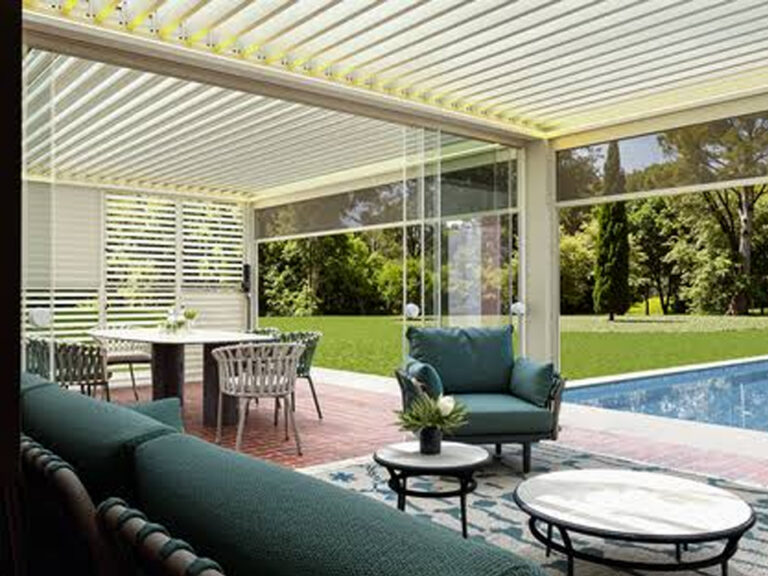
A modern aluminum pergola can define a dining area, outdoor kitchen, poolside lounge or hospitality terrace without visually enclosing the space. Compared with a loose umbrella, the structure becomes part of the architecture.
But there is an important distinction: a pergola is not automatically a shade solution.
Traditional open-joist pergolas may create attractive shadow patterns while still allowing considerable direct sunlight through. If substantial solar control is the objective, look at the roof configuration: fixed slats, adjustable louvers, retractable fabric or another coverage system.
That is why pergola shade ideas should begin with performance rather than appearance.
For a west-facing patio, for example, overhead louvers alone may not solve late-afternoon exposure. Side screening, planting or adjustable elements may still be necessary.
The uncomfortable truth is that photographs can be misleading. A pergola photographed at 10 a.m. can look perfectly shaded; the same structure at 4:30 p.m. can behave very differently.
Where pergolas work best
Pergolas are strongest for:
permanent dining terraces;
outdoor kitchens;
frequently used residential patios;
hotel and restaurant seating;
poolside lounge areas;
large gardens requiring architectural structure.
If your priority is a long-term outdoor living zone rather than occasional shade, this is usually where I would start.
3. Garden Parasols: Better When Flexibility Matters
Not every patio needs construction.
A well-positioned patio umbrella or parasol can be one of the most efficient outdoor shade ideas because the shade can be placed exactly where people sit instead of covering unused ground.
Cantilever designs are particularly useful around dining tables, sofas and pools because the support column can sit outside the occupied zone.
That sounds simple. It is not.
The base matters enormously. So does canopy area, wind exposure and placement. A very large canopy with an inadequate base is not an upgrade.
For smaller patios, rental properties or spaces that change configuration frequently, parasols have an advantage that permanent structures cannot match: mobility.
Move the furniture? Move the shade.
Need winter sunlight? Remove it.
Hosting a larger group? Reorient the canopy.
This is why some of the best garden shade ideas are not permanent at all.
4. Gazebos: More Shelter, More Visual Weight
A gazebo sits further toward the “outdoor room” end of the spectrum.
Unlike a relatively open pergola, a garden gazebo generally provides more continuous overhead coverage, which makes it useful when protection from both intense sun and light rain matters.
It also creates a stronger focal point.
That can be an advantage in a large backyard but a disadvantage in a tight one. Put an oversized gazebo into a compact suburban garden and the structure can dominate everything around it.
Scale matters.
For homeowners comparing backyard shade ideas, I would use gazebos when the objective is a clearly defined destination: a dining pavilion, lounge zone, spa area or garden retreat.
Not merely “some shade.”
5. Outdoor Cabanas: Shade for Lounging and Privacy
Cabanas solve a slightly different problem.
They combine overhead protection with a greater sense of enclosure, making outdoor cabanas particularly suited to pool decks, hospitality spaces and deep lounge areas where users may want privacy as well as solar protection.
Think of the distinction this way:
A parasol shades furniture.
A pergola organizes space.
A gazebo creates a pavilion.
A cabana creates a retreat.
That is an oversimplification, obviously, but it is a useful design test.
Cabanas become especially effective when curtains, screens or side panels can respond to low-angle sun. In that situation, the structure controls sunlight from more than one direction instead of relying solely on an overhead roof.
6. Natural Garden Shade: Trees Can Outperform Expectations
Planting is slower.
But it deserves more attention.
Trees provide shade while also cooling through evapotranspiration—the movement and evaporation of water through vegetation—which is fundamentally different from simply intercepting sunlight with a manufactured canopy.
The evidence is substantial. A 2024 study published in Communications Earth & Environment synthesized 182 studies across 110 cities or regions and 17 climate types. It found that the cooling performance of trees depended heavily on climate, tree characteristics and urban geometry; tree implementation reduced peak monthly temperatures below 26°C in 83% of the cities examined. You can read the 2024 global tree-cooling meta-analysis directly.
But that does not mean “plant any tree anywhere.”
Species selection, canopy shape, mature dimensions, water requirements, root behavior, orientation and local climate all matter.
A fast-growing tree placed too close to paving or foundations can become tomorrow’s maintenance problem. A tiny ornamental tree planted on the wrong side of the patio may cast almost no useful shade during peak use.
Для natural garden shade, placement can matter as much as species.
Consider trees for:
western and southwestern exposure;
lawn seating areas;
pathways;
children’s activity spaces;
paved zones that accumulate heat;
layered planting around permanent shade structures.
And combine methods. A pergola can provide immediate shade while trees mature over several years.
That is often a better strategy than choosing between vegetation and structures.
7. Combine Pergolas With Climbing Plants
This is where hardscape and planting start working together.
A pergola can act as the supporting framework while climbing plants add seasonal coverage, texture and softer shadow.
The visual result is obvious, but the design advantage is subtler: plant coverage can reduce gaps through which direct solar radiation reaches occupants.
Still, do not romanticize it.
Living coverage requires pruning, irrigation, species management and patience. Deciduous plants can also behave very differently between July and January.
In climates where winter sunlight is desirable, that may be exactly the point.
8. Use Layered Shade Instead of One Giant Structure
More coverage is not always better.
I would rather see three strategically positioned shade layers than one enormous roof swallowing the entire backyard.
For example:
Layer 1: permanent pergola above the primary dining zone.
Layer 2: deciduous trees along western exposure.
Layer 3: movable parasol beside a secondary lounge chair or pool.
Now the garden responds differently throughout the day.
This approach also avoids turning an outdoor space into a dark extension of the house.
Shade should control sunlight, not eliminate daylight.
9. Retractable Shade Gives You Something Fixed Roofs Cannot: Choice
Some gardens need shade in August and sunlight in February.
That is where retractable systems earn their keep.
Retractable awnings, sliding fabric canopies and adjustable pergola roofs let the user modify coverage as weather, season and activity change.
Want morning sun?
Open it.
Lunch getting hot?
Close it.
The ability to reverse the condition is valuable because the ideal amount of solar exposure rarely stays constant for twelve months.
This is especially relevant in temperate climates, where solar gain may be welcome in cooler seasons.
10. Shade the Activity Zone, Not the Entire Garden
This sounds obvious.
It is routinely ignored.
When considering how to create shade in a garden, map where people actually spend time:
dining chairs;
outdoor sofas;
barbecue preparation areas;
children’s tables;
pool loungers;
reading chairs;
frequently used pathways.
Then shade those areas first.
A 400-square-foot canopy over an empty lawn contributes less to everyday comfort than a carefully positioned 100-square-foot canopy above the dining table.
Design around behavior.
Not photographs.
Comparing the Main Garden Shade Ideas
Shade Solution
Flexibility
Coverage
Best Application
Main Advantage
Main Limitation
Aluminum Pergola
Medium
Medium–High
Dining, kitchens, large patios
Permanent architectural structure
Requires planning and installation
Garden Parasol
High
Low–Medium
Tables, pools, small patios
Movable and fast to deploy
Wind and base requirements
Беседка
Low
High
Backyard dining and lounge areas
Strong continuous overhead shelter
Greater visual mass
Outdoor Cabana
Medium
Medium–High
Poolside and hospitality lounging
Shade plus privacy
Needs more floor area
Shade Tree
Low after planting
Medium–High at maturity
Lawns, patios, pathways
Shade plus evaporative cooling
Takes time to mature
Retractable Awning
High
Medium
House-adjacent patios
Shade on demand
Limited placement options
Climbing Plants + Pergola
Medium
Variable
Garden dining and seating
Soft, natural coverage
Maintenance and growth time
11. Do Not Ignore the Ground Beneath the Shade
People focus on the canopy.
I also look down.
Dark stone, concrete, composite surfaces and other exposed materials can absorb solar energy and later release heat into the immediate environment. This is one reason vegetation and shade can have effects beyond the air temperature itself.
Historic EPA research has reported dramatically lower surface temperatures beneath shade compared with unshaded materials, although exact performance varies by surface, climate and conditions. EPA continues to recommend vegetation, shade, cool roofs and related measures as part of its broader heat-island reduction strategy.
So if a patio remains uncomfortable after installing overhead shade, inspect the surrounding surfaces.
The canopy may not be the whole problem.
12. Think About Airflow Before Adding Side Screens
There is a trade-off.
Vertical screens can stop low-angle sun, but enclosing every side of a shaded structure can also reduce air movement.
For outdoor comfort, the winning configuration is often shade plus ventilation, not maximum enclosure.
Use screens selectively.
A western side panel may be valuable.
Four solid walls probably are not.
And in very humid environments, preserving airflow becomes even more important because reducing radiant solar exposure solves only part of the comfort equation.
13. The Best Shade Strategy Changes With the Space
Для small patio, start with a cantilever parasol or compact awning.
Для large backyard, combine trees with a permanent pergola or gazebo.
Для pool area, movable umbrellas and cabanas provide targeted coverage around loungers without shading the entire pool.
Для outdoor kitchen, use permanent overhead protection positioned around cooking, preparation and dining zones.
Для commercial terrace, modular pergolas or coordinated parasols make it easier to organize multiple seating zones.
And for a garden that already has mature trees?
Use them.
Design around existing shade before paying to manufacture more of it.
FAQ
What are the best garden shade ideas?
The best garden shade ideas combine permanent and adjustable protection according to sun direction, space size and how the garden is used, typically using pergolas or gazebos for primary zones, parasols for movable coverage, and trees or climbing plants to provide natural shade around patios, paths and secondary seating areas.
There is no universally superior system. A pergola is stronger for permanent outdoor dining, while a parasol may be more practical for a small patio or poolside chair. In larger gardens, combining structural and natural shade usually gives better day-long coverage.
How do I create shade in a garden without building a permanent structure?
You can create garden shade without permanent construction by using cantilever parasols, freestanding umbrellas, retractable fabric systems, shade sails and strategically positioned container plants, allowing coverage to move or change as the sun shifts while avoiding the foundations, posts and construction associated with pergolas, gazebos or other permanent shelters.
This approach is particularly suitable for rental properties, small gardens and spaces where furniture layouts change frequently. A properly selected base and consideration of wind exposure remain important for freestanding shade.
Are pergolas good for garden shade?
Pergolas are effective garden shade structures when their roof design controls direct solar exposure, particularly when they use adjustable louvers, retractable canopies, closely spaced slats or vegetation rather than relying on a widely spaced decorative frame that may create attractive shadows without providing enough protection during the hottest hours.
The roof is only part of the equation. Low western sunlight can enter beneath the edge of a pergola, so side screens, planting or orientation may also be needed.
Are trees better than pergolas for natural garden shade?
Trees are often the strongest natural garden shade option because their canopies intercept sunlight while vegetation also contributes evaporative cooling, whereas pergolas provide immediate and predictable structural coverage; the better choice therefore depends on whether the priority is instant shade, long-term natural cooling, architectural definition, maintenance requirements or seasonal flexibility.
The 2024 global meta-analysis covering 182 studies shows why simplistic comparisons are risky: tree-cooling performance changes according to climate, species characteristics and surrounding urban form.
In many gardens, the strongest solution is not trees or pergolas. It is both.
What is the best shade solution for a small patio?
The best shade solution for a small patio is usually a compact cantilever parasol, wall-mounted retractable awning or carefully sized pergola because these systems can concentrate useful shade above the seating or dining area without consuming excessive floor space or making a relatively small outdoor area feel visually crowded or permanently enclosed.
Measure the usable patio first rather than choosing equipment from product photographs. Pole position, canopy projection, door clearances and furniture circulation can determine whether the installation actually works.
How should I position shade in a backyard?
Backyard shade should be positioned according to the sun path and the hours when people actually use the space, with particular attention to afternoon western exposure, dining areas, lounge seating and other high-use zones rather than trying to cover the entire property uniformly with one oversized canopy, roof or planting scheme.
Observe the backyard at several times during a clear day before finalizing a permanent structure. The shade pattern visible at noon can be very different from the one experienced during an evening meal.
Build Shade Around How You Actually Live Outdoors
A good garden is not a showroom.
It has to work at 3 p.m. in July.
That means choosing shade according to solar direction, airflow, activity zones, climate and flexibility—not simply picking whichever structure photographs best.