Trasforma le tue idee per l'arredamento da esterno in prodotti finiti
Inviateci i vostri disegni, le specifiche tecniche o le vostre idee. I nostri ingegneri e il nostro team commerciale valuteranno i materiali, le dimensioni, le finiture e le opzioni di personalizzazione.
The expression identifies an application approach, not the resin chemistry, metal pretreatment, healed movie density, ultraviolet security, deterioration resistance, side coverage, color resistance, or expected life span. Yet it shows up in quotes daily as though those two words settle the matter.
They do not.
A resort balcony in Phoenix metro, a restaurant close to the Atlantic, and a protected corporate yard impose radically different stresses. If all three orders bring the exact same common surface note, at the very least one purchaser is possibly acquiring the wrong layer system. Who soaks up that blunder when liquid chalking, blistering, or under-film corrosion appears 18 months later on?
Typically, the contract customer.
“Powder-Coated” Is a Refine Claim, Not an Efficiency Spec
Here is the hard fact: several business outdoor furniture coatings are sold via adjectives due to the fact that the quantifiable results are much less flattering.
“Costs,” “weather-resistant,” and “commercial-grade” have no fixed technical definition. A useful powder finishing spec identifies the substrate, pretreatment, resin system, authorized product, film-thickness variety, cure requirement, examination methods, acceptance limitations, tasting strategy, and guarantee treatment.
That is the minimum.
I would certainly turn down a quote that merely assures an “outdoor powder finish.” The vendor must have the ability to recognize whether the powder is typical polyester, super-durable polyester, polyurethane, fluoropolymer, epoxy-polyester hybrid, or another chemistry. It ought to also supply the technical information sheet, batch certificate, powder producer, product code, and healing window.
Why so rigorous?
Because a perfectly coated display room sample can hide weak conversion treatment, inadequate treating, polluted welds, and poor side insurance coverage. The problem might not become noticeable up until the furnishings has actually crossed an ocean, got in solution, and began generating visitor problems.
Classify the Exposure Before Picking the Finish
There is no single ideal powder layer for exterior furniture. There is only a covering system matched– or mismatched– to its exposure.
Customers should identify the destination prior to asking for a rate:
Modest exposure: Covered patios, completely dry inland environments, limited straight sunlight, and no pool or aquatic aerosols.
High exposure: Full sunlight, normal rains, freeze-thaw cycles, irrigation overspray, regular cleaning, or heavy business use.
Severe direct exposure: Coastal salt, swimming pool chemicals, relentless humidity, industrial after effects, desert UV, or places where replacement is operationally expensive.
Extreme exposure: Oceanfront setups, cruise terminals, roof hospitality sites, and public projects needing prolonged finish guarantees.
Distance from the sea is a poor stand-alone measure. Wind direction, air-borne chloride concentration, sheltering, water drainage, and cleansing regularity can matter more than a neat five-kilometre line on a map.
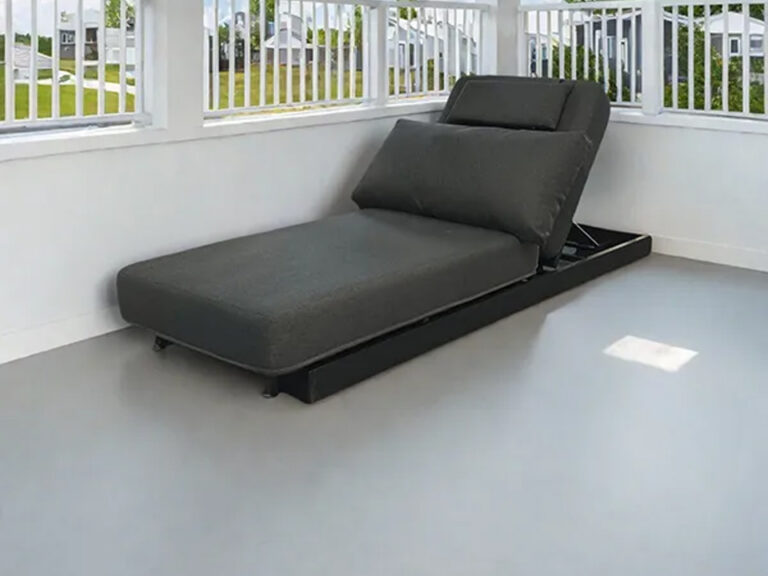
Item geometry matters as well. Water collects around welded joints, fastener user interfaces, tube ends, stacking points, and straight joints. An adjustable device on a industrial exterior sunlight lounger also develops rubbing and concealed contact locations that a flat laboratory panel can not replicate.
Specify the actual item.
Pick the Resin by Chemistry, Not Advertising Language
For many exterior metal furnishings, I favor an exterior-grade polyester powder finishing as the standard. For jobs revealed to intense UV or lugging longer look warranties, super-durable polyester is generally the extra defensible selection.
Basic epoxy powder ought to not be accepted as a revealed outside overcoat. Epoxy can provide strong bond and chemical resistance, but sunshine degrades its appearance. Liquid chalking and color loss are foreseeable, not strange.
Usual choices consist of:
Requirement polyester: Affordable and suitable for modest exterior exposure when appropriately pretreated and treated.
Super-durable polyester: Better lasting color and gloss retention for high-UV hospitality and business sites.
Polyurethane powder: Excellent appearance and weathering possible, subject to the certain solution and supplier information.
Fluoropolymer powder: Premium weatherability for demanding architectural-style projects, but higher price, narrower provider availability, and much more demanding process control.
Epoxy primer plus polyester overcoat: A valuable duplex system for steel in corrosive settings.
E-coat plus polyester powder: Solid insurance coverage inside complex steel areas when water drainage, pretreatment, and curing are effectively managed.
TGIC-cured polyester and β-hydroxyalkylamide, or HAA, polyester are not interchangeable labels. Purchasers should call for the accurate product classification and compliance affirmation for the destination market as opposed to trying to prescribe chemistry from a sales pamphlet.
And color adjustments the threat. Dark finishes can get to high surface area temperature levels in straight sunlight; intense natural pigments might discolor quicker; great structures can keep dirt; metallic powders can differ with gun settings and part orientation.
The coating board is not nearly enough.
Pretreatment Identifies Whether the Finish Endures
Powder does not rescue filthy steel.
A 100-micrometre topcoat over oil, oxide, weld residue, or a weak conversion layer can fall short faster than a thinner film applied over disciplined pretreatment. Customers obsess over coating thickness because it is very easy to measure. They often disregard the chemistry below because it is invisible.
For light weight aluminum, the process usually includes cleansing, rinsing, etching or deoxidizing, and an authorized conversion treatment. Zirconium- or titanium-based systems are common chromate-free choices, while pre-anodizing may be suitable for defined severe conditions. The precise route should match the alloy, casting top quality, welds, and approved layer system.
For carbon steel, iron phosphate is a basic alternative. Zinc phosphate, electrophoretic finishing, or an epoxy-rich primer below a polyester overcoat provides a stronger basis for high-corrosion exposure. Galvanized steel requires its very own prep work controls; finishing fresh zinc without taking care of surface area problem and outgassing invites pinholes or attachment failing.
Cast light weight aluminum is entitled to extra uncertainty. Entrapped gases can run away throughout curing and leave pinholes, bubbles, or craters. A distributor might need regulated pre-baking, an outgassing-tolerant powder, or both.
My rule is straightforward: if the manufacturing facility will not disclose its pretreatment phases, bath controls, rinse-water limitations, and confirmation documents, the buyer does not have a coating requirements. The purchaser has faith.
A Buyer-Ready Powder Coating Specification
The adhering to worths are useful purchase starting points, not global engineering limitations. Last requirements ought to mirror the substrate, geometry, powder maker’s technical information sheet, desired environment, and guarantee period.
Control factor
Moderate business exposure
High or severe exposure
Required evidence
Overcoat chemistry
Outside polyester
Super-durable polyester or accepted fluoropolymer system
Item code, maker and technological information sheet
Aluminum pretreatment
Approved multistage conversion treatment
Boosted conversion treatment or certified pre-anodizing system
Refine flow, bath logs and approval certificate
Steel pretreatment
Iron or zinc phosphate
Zinc phosphate, e-coat, or accepted corrosion-resistant guide
Process documents and system declaration
Single-coat dry-film density
60– 90 µm
70– 100 µm
Calibrated gauge analyses on manufacturing components
Duplex-system thickness
Defined by authorized system
Guide and topcoat gauged individually where possible
Layer targets and total-film report
Adhesion
ASTM D3359, 4B minimum
ASTM D3359, 5B chosen
Test images and authorized evaluation document
Neutral salt spray
Buyer-defined; generally 500– 1,000 hours
Buyer-defined; commonly 1,000– 2,000 hours
ISO/IEC 17025 laboratory record
Salt-spray failing requirements
No area blistering or red rust; scribe creep stated
Tighter scribe-creep and blistering limitations
Rated panels, photos and raw observations
Sped up UV direct exposure
Project-specific ASTM G154 cycle
Longer direct exposure plus shade and gloss limitations
Pre-test and post-test analyses
Shade tolerance
Approved master panel
Lot-to-lot ΔE00 limit under stated problems
Spectrophotometer record
Gloss
Target plus tolerance at specified angle
Target plus tighter lot consistency
ASTM D523 analyses
Treat
Powder distributor’s metal-temperature routine
Videotaped part-metal temperature level profile
Datapaq or equal stove trace
Influence resistance
Project-defined ASTM D2794 result
Greater requirement where stacking is expected
Checked production-representative panel
Warranty
Written treatment and exemptions
Site-specific finish guarantee
Implemented warranty document
Numbers without approaches are weak. “Salt spray: 1,000 hours” does not specify the panel preparation, scribe geometry, evaluation period, allowed creep, blister rating, side defense, or pass/fail regulation.
ASTM itself cautions that stand-alone salt-spray performance has actually hardly ever associated dependably with natural-environment efficiency and that results can range nominally comparable chambers. So a supplier flaunting about 2,000 hours while declining to divulge examination criteria is selling theater, not evidence.
Set rust screening with UV exposure, wet bond, impact resistance, real-site direct exposure history, and production-part assessment.
Examine the Furniture, Not Just a Convenient Apartment Panel
Lab panels make procedures comparable. They do not recreate furniture geometry.
Weld seams, tube insides, drainage openings, sharp edges, threaded inserts, concealed grounding factors, and get in touch with surfaces are common failing locations. A panel passing ASTM D3359 says little regarding an inadequately cleansed weld surprise beneath a chair seat.
That space is pricey.
Per un rectangular outdoor patio dining established planned for hospitality purchase, the evaluation plan should include table-leg welds, underside junctions, screw user interfaces, water traps, chair stacking points, and feet that repeatedly contact wet paving. What excellent is a perfect examination voucher if the real table begins rusting from an unsealed tube end?
Usage production-representative parts for:
Dry-film-thickness mapping at apartments, edges, welds, and recessed locations.
Cross-cut bond after full cure.
Heal confirmation using actual part-metal temperature.
Aesthetic evaluation under defined lighting and watching range.
Color measurement versus an authorized master requirement.
Water-drainage and tube-closure examination.
Setting up screening to find layer damage around bolts.
Product packaging simulation for abrasion between piled structures.
ASTM D2794-93( 2024) reviews whether a layer cracks when the layered substrate is rapidly deformed by influence, although ASTM cautions that numerical results have bad interlaboratory reproducibility. That caution belongs in the buying choice: compare results within a regulated program, and do not act one separated number is axiom.
Define Look with Instruments and Signed Samples
“Matte black” is not a requirements.
Compose the RAL, Pantone, or consumer shade reference; powder product code; appearance; gloss target; measurement angle; resistances; illuminant; onlooker setup; and accepted master panel. For numerous furnishings surfaces, 60-degree gloss is the beginning measurement, yet very low-gloss surfaces might require an 85-degree geometry and high-gloss surface areas a 20-degree geometry.
Structure makes complex analyses. So do metal flakes.
For noticeable elements in a patio area sofa set with footrests, specify whether shade matching uses across aluminum structures, steel braces, cast parts, and replacement units purchased two years later. Identical powder splashed on different substratums can still appear different.
A sensible purchase order must establish:
One signed physical master panel.
One retained vendor panel.
Crucial color resistance, such as a concurred ΔE00 limitation.
Gloss target with an explicit tolerance.
Policies for aesthetic metamerism.
Lot-to-lot matching needs.
Replacement-part matching assumptions.
Approval duty when a pigment or powder set changes.
This appears fussy. It is cheaper than changing 300 chairs because the second manufacturing set looks environment-friendly close to the initial.
Audit Refine Control Prior To Trusting Certifications
A certification is proof just when it can be traced to the supplied items.
Request the powder set number, finishing day, production order, substrate whole lot, pretreatment line, oven profile, assessor, gauge identification number, calibration standing, sampling locations, raw analyses, failed readings, rework documents, and last personality. A generic record from 6 months previously shows that someone when evaluated something.
Not your order.
The 2024 QUALICOAT specification ended up being efficient on January 1, 2024, and its authorization framework consisted of completely dry and damp attachment, humid-atmosphere resistance, acetic-acid salt spray, accelerated weathering, Florida exposure, polymerization, scratch resistance, and various other controls. QUALICOAT is composed for building light weight aluminum instead of furniture as a complete item requirement, yet its procedure self-control supplies contract purchasers a valuable lesson: top quality is a regulated system, not a last visual check.
Factory safety belongs in the audit also. In a 2023 OSHA enforcement case, accumulated powder coating categorized as combustible dirt brought about a first charge of $10,938, later on cleared up at $8,000; the mentioned accumulation exceeded 1/32 inch in appropriate workplace. A filthy booth location is not merely a housekeeping trouble. It is proof that transfer effectiveness, reclamation, contamination control, upkeep, and management self-control might all be weak.
I would certainly ask to see the booth promptly after a shade modification. That is when procedure fact ends up being visible.
See Rework, Stripping, and Chemical Conformity
Rework can silently revoke the initial covering system.
If a denied structure is recoated without complete elimination, extreme movie construct can interfere with assembly, flexibility, effect resistance, grounding, and appearance. If it is chemically removed, the customer ought to know which chemical is used, just how deposits are gotten rid of, and whether the substratum is pretreated once again through the complete accepted sequence.
On April 30, 2024, the U.S. Epa wrapped up restrictions covering most commercial and business uses of methylene chloride, consisting of paint and layer cleaners, while keeping limited usages under stronger work environment controls. That decision ought to alter distributor surveys: “solvent removing” is no more an adequate response for U.S.-bound programs.
For European supply chains, Commission Regulation (EU) 2023/2055 changed REACH Annex XVII concerning artificial polymer microparticles, with industrial-site uses treated differently because their emissions can be controlled. Purchasers must ask for existing Safety and security Information Sheets, get to affirmations, restricted-substance verifications, waste controls, and disclosure of any reportable polymer-powder handling responsibilities.
Do decline “no VOC” as a full environmental declaration. Powder finish might decrease solvent exhausts, but it still entails power, overspray, cleaning up chemicals, pretreatment waste, infected filters, and flammable dirt.
Connect Finish Needs to Furniture Design
The finishing requirements must adhere to the product’s use pattern.
A lying chaise has pivots, sliders, springtimes, and hand-clearance zones. A dining chair has stacking get in touches with. A woven chair hides framework areas under synthetic fiber. A sofa component might hold wetness under pillows and inside connector joints.
In June 2024, the United State Customer Item Safety Compensation remembered regarding 70,000 Frontgate Newport chaises with powder-coated light weight aluminum or teak wood frameworks due to finger-crushing and amputation risks connected with the reclining mechanism. The case was not a finish failing– which is precisely the point. A premium surface does not compensate for weak mechanical danger analysis.
Another 2024 CPSC action covered around 1,600 metal-framed elbow chairs after five reports of legs breaking, consisting of four reports of minor injuries. Buyers need a joined-up specification covering structural testing, stability, squeeze points, bolts, deterioration, and surface efficiency.
Finish design begins at style review, not at the spray booth.
Put Treatments right into the Purchase Order
A spec without a remedy is a technical essay.
Define what happens when production stops working. Alternatives include sorting, revamping, recoating, changing, attributing, paying third-party evaluation costs, repaying area labor, providing extra parts, or expanding the guarantee.
The service warranty must differentiate:
Adhesion loss.
Blistering.
Red rust on steel.
Filiform corrosion on light weight aluminum.
Too much chalking.
Color modification past the concurred ΔE00.
Gloss loss beyond the concurred retention restriction.
Damage brought on by scratches, abuse, pool chemicals, coastal direct exposure, or banned cleaners.
Failures coming from at welds, sides, bolts, and concealed surface areas.
Appearance-only cases versus architectural corrosion.
Call for an approved treatment overview. After that make certain the exclusions do not remove the guarantee. A “five-year exterior service warranty” that omits sunshine, salt, moisture, chemicals, abrasion, and industrial usage is 5 years of decorative paper.
Frequently Asked Concerns
What is the best powder covering for outside furniture?
The best powder finishing for exterior furnishings is an exterior-rated system matched to the substrate, UV exposure, corrosion category, cleaning chemicals, product geometry, and required guarantee, with super-durable polyester usually functioning as the practical baseline for demanding industrial installments and epoxy reserved largely for safeguarded primers as opposed to subjected topcoats.
For serious coastal steel, think about a certified zinc-phosphate-plus-primer system or e-coat below the polyester overcoat. For light weight aluminum, concentrate on pretreatment quality, alloy problem, edge coverage, and weathering data– not powder chemistry alone.
Just how thick should patio furniture powder covering be?
Patio area furniture powder finish is frequently defined at about 60– 100 µm for a solitary outside topcoat, yet the proper range must adhere to the approved powder system, substratum geometry, rust exposure, setting up tolerances, and vendor data sheet, with separate demands established for primers, duplex systems, sides, welds, recesses, and covered up interfaces.
More is not automatically better. Too much density can cause orange peel, bad fit, lowered flexibility, side splitting, or insufficient treatment, while slim insurance coverage at welds and edges can end up being the initial rust website.
Which powder layer requirements should get purchasers specify?
Powder finishing standards for outdoor furniture must integrate test methods for film thickness, bond, deterioration, ultraviolet direct exposure, gloss, color modification, effect resistance, and remedy, while attaching explicit approval restrictions and sample-preparation rules because a technique such as ASTM B117 defines test conditions yet does not independently define a passing furniture surface.
Useful recommendations may include ASTM D3359, ASTM B117, ASTM G154, ASTM D523, ASTM D2794, ISO 2409, ISO 9227, and project-appropriate QUALICOAT or AAMA performance standards. Verify the existing version and licensing demands prior to placing them in an agreement.
Is powder-coated light weight aluminum far better than powder-coated steel outdoors?
Powder-coated aluminum generally uses lower deterioration danger due to the fact that aluminum does not create red corrosion, while powder-coated steel can supply better rigidity and reduced product cost; nevertheless, either product can fall short when alloy top quality, water drainage, welding, pretreatment, side insurance coverage, finishing cure, bolt choice, or upkeep is inadequately managed.
Pick by total solution requirement. Coastal projects typically prefer aluminum, while properly secured steel can remain commercially sound where tons, cost, repairability, and controlled direct exposure warrant it.
How should purchasers define powder layer on a furnishings purchase order?
A furnishings purchase order should define the steel substrate, service environment, pretreatment series, powder supplier and product code, material type, shade, texture, gloss, movie thickness, remedy routine, examination approaches, acceptance limitations, sampling strategy, traceability records, approved sample, packaging security, guarantee period, exclusions, and solution for declined or failed items.
Connect the finish timetable rather than burying it in email. Require signed authorization prior to replacements, remodel, powder-batch adjustments, or pretreatment modifications are allowed.
Transform the Finish Case right into a Contract
Outdoor furniture powder finish need to be purchased as a validated efficiency system, not an attractive adjective.
Compose the direct exposure category. Name the substrate and pretreatment. Approve the powder product. Set quantifiable approval limits. Evaluate manufacturing furnishings. Maintain traceability. Define the warranty solution.
After that rate the order.
For project-specific outdoor furniture sourcing, send us the location climate, substrate, product type, annual quantity, finish service warranty, RAL color, and required examination requirements. We can convert those commercial requirements right into a supplier-ready finish timetable and evaluation list before mass production begins.